SESSION 15 · 10/26 · PARTLY WORKED
The Moon in the 127, found by eye
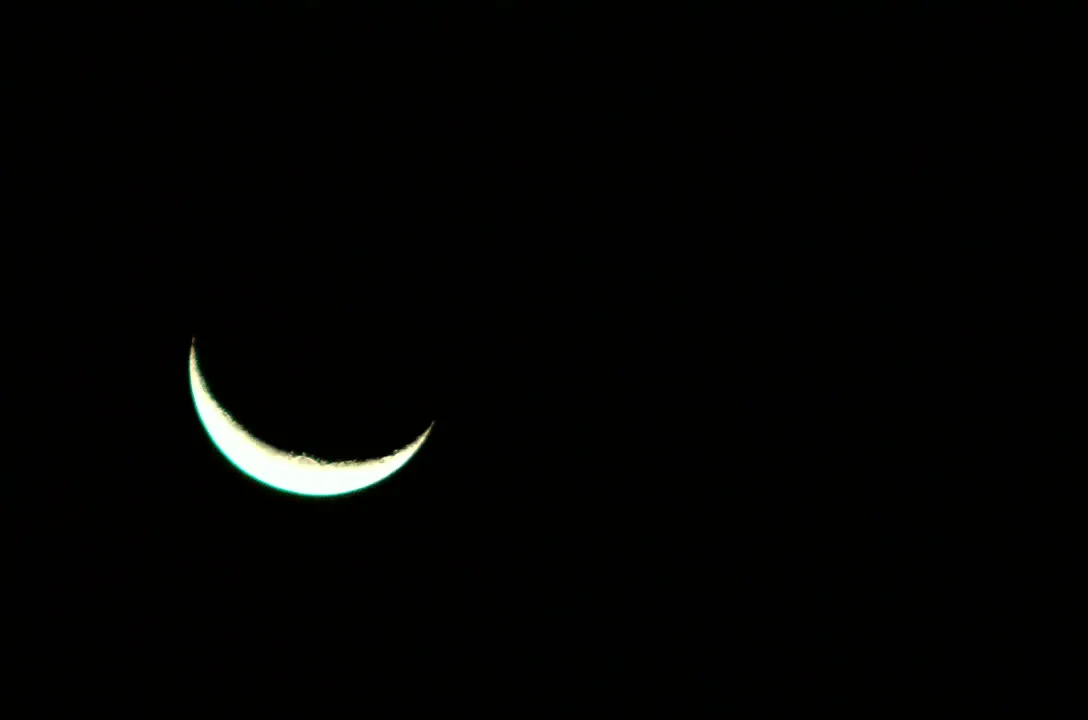
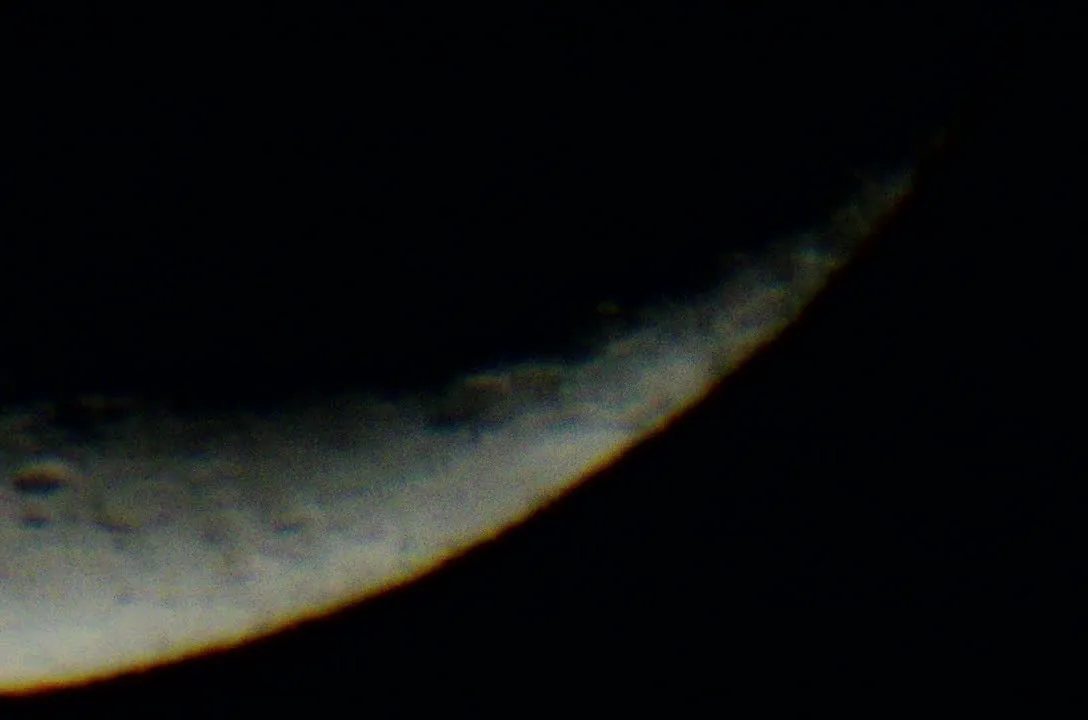
A night of near misses with the 127 and the AZ-GTi: the mount's WiFi link lost half its packets, the house power went out, the finder-to-Mak offset turned out to be more than a degree and a two-degree camera sweep never found it. The Moon reached the Mak at 22:15 because I saw it in the eyepiece, and was focused at 22:23 with craters on the terminator. The recording of it is 227 black frames.
127 Mak on the AZ-GTi, SV205 moved between the finder and the Mak all night. Laptop inside on the house WiFi, then on the mount's own hotspot with the phone as a tether. Scope homed north by compass, level, at about 19:20. Written up the morning after.
The link was the night. The GTi was back on the home wifi after yesterday's hotspot mix-up and the SSID I had mistyped, but it answered barely half of the pings sent to it even while sitting still. Two access points broadcast the home wifi from the house, one strong and one weak, and the mount's little radio seems to flap between them. Every goto correction, every jog and every tracking restart tonight died on that link: "no ack", "lost axis readback", "mount went offline" over and over. The first goto from home, 99 degrees of slew, got there, then its correction got no acknowledgement and Freedom-Find decided the tube had been pushed 4.3 degrees and re-synced to that. Nobody had touched it.
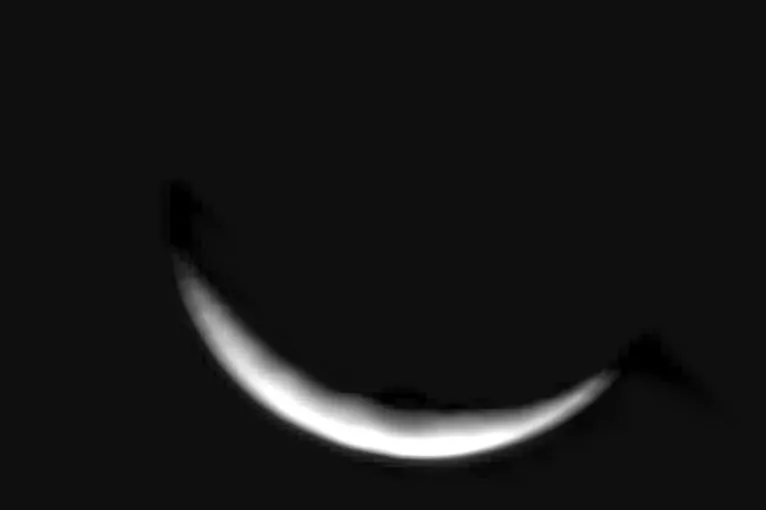
The finder got measured, at least. With the Moon in the finder by hand, two six-arcminute test moves gave me the finder's image axes: altitude up moves the image straight down the frame, azimuth up moves it left, both about 9.5 pixels per arcminute in the fit view. That makes the finder's scale about 2.0 arcseconds per pixel, not the 2.45 rig-ui assumes from a 118 mm focal length, so the search spiral steps are a fifth too big. The map centred the Moon twice tonight when nothing else could.
rig-ui's calibration threw the Moon out. Its staircase steps half a degree one way, then refuses its own return move as over the step cap, and leaves the field half a degree off. Undone by hand, logged for fixing.
19:57, the power went out
The laptop rebooted and my scratch files, including the finder map, went with it. The mount was on its battery and kept its encoder counts, which I only worked out from the auxiliary encoders agreeing with the motors. The alignment survived; the goto afterwards arrived "1.4 arcminutes from where the model puts it" and the Moon was nowhere in the finder, because by then the tube had been pushed by hand with rig-ui down, and it had no way to know.
Antares as a signpost
At 20:41 a bright star sat in the finder with the Moon gone. The mount's position put the scope 5.9 degrees above and 1.8 degrees across from the Moon. Antares is 5.9 degrees above and 2.2 across from it. So: down six degrees and a little left. It worked.
The clean link, too late
At 21:17 the laptop went onto the mount's own hotspot with the phone tethered over USB to carry the session. Zero packet loss. A full goto and a thirteen-row sweep ran without a single dropout. Two things bit even then: the SynScan app on the phone, connected to the same hotspot, took over the mount's command channel so the laptop got pings back but no answers, and a hand push after a power cycle had left the altitude counter below zero, which rig-ui treats as the horizon and refuses to go under. I re-based the counter by twenty degrees with the mount stopped.
The sweep that found nothing
With the Moon dead centre in the finder and the camera in the Mak, thirteen rows ten arcminutes apart, each a 2.5-degree azimuth sweep at 32x, plus or minus a degree in altitude. Nothing. The Mak's field is 10 by 7 arcminutes and the lit crescent is a four-arcminute arc, so the rows were tight enough. The offset is bigger than the area covered, or the wash of defocused light never got sharp enough for a threshold that wanted an edge. The 8 October boresight was useless; the finder bracket took several knocks tonight and I do not think it is adjustable.
Found by eye
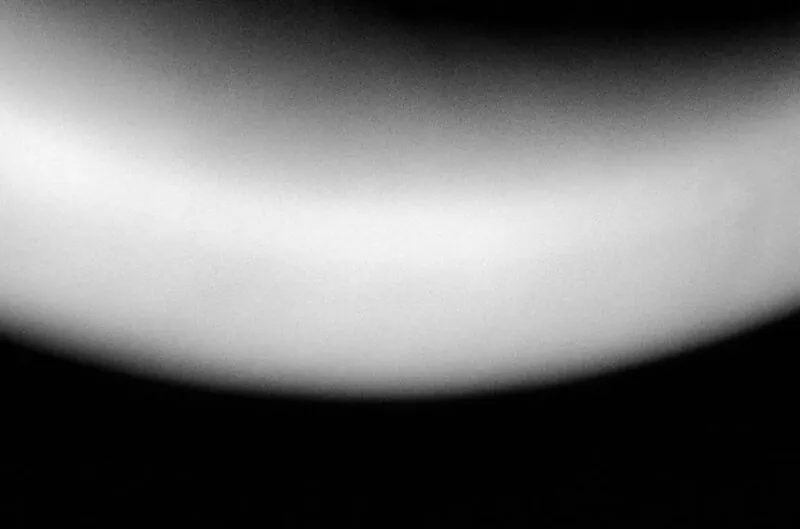
At 22:15 I saw the Moon in a low-power eyepiece in the Mak, just outside where the camera looks. Two pushes carried it straight through the camera's field and out the other side, the whole frame flashing white each time. Then the jog pad at 2x, a tap at a time, and it held. Racking the focuser turned the wash into a limb with craters on it at 22:23. The recording I made at 22:24 is 227 frames of zero: rig-ui's record path reopens the camera and loses the exposure, the same trap the mosaic script hit in September. The live frame is the keeper. The Moon was six degrees up.
| time | run | exp | result |
|---|---|---|---|
| 21:43 | finder limb, 12 s SER | 3 ms | stacked, crescent, no earthshine |
| 21:43 | finder earthshine, 12 s SER | 100 ms | disc not above the sky, kept for the stack array |
| 22:24 | Mak, 15 s SER | 10 ms | all black, deleted |
What I got wrong
- Left the SynScan app connected while rig-ui drove. It steals the command channel.
- Pushed the tube by hand with rig-ui down. Its model had no idea, and the next goto was honest about where the model thought it was and wrong about the sky.
- Trusted "whole frame bright" to mean nothing. It meant the Moon, out of focus.
- Sent the Mak search looking for an edge. A defocused crescent has none.
Left for next time
- Measure the finder-to-Mak offset in daylight. Camera in the Mak on a distant object, camera in the finder, note the position. rig-ui stores it as the boresight. Five minutes, and it is the whole problem.
- Calibrate the finder transform properly once the calibration bug is fixed, or from tonight's numbers.
- Hotspot mode for rig-ui and the launcher. The tether-plus-hotspot link is the only one that worked. Make it one command.
- Record must re-apply the exposure after it opens the stream, and refuse black frames.
- Home the mount and connect to it straight away. Twice tonight the counters were zeroed wherever the tube happened to be.
- A 127 profile in AstroDMx.