LEARNED IT · 11/26
One star is not an alignment
Aligning on the target alone tells the mount where it is pointing, not how far it is from level. The tracking rates that come out of a one-point model are wrong by a steady amount, and the planet…
 AUSSIESCIENCE CLIPS.
Subscribe on YouTube
STARLOG · A BEGINNER'S LOGBOOK
The first telescope, the first photos, and everything that went wrong in between.
A public logbook of learning amateur astronomy from scratch, under southern skies in Goolwa, South Australia. Each entry is written up from the night it happened: what the sky and seeing were doing, what was tried, what worked and what didn't, and the images as they came out, the bad ones included. By Brendan.
LEARNED IT · 11/26
Aligning on the target alone tells the mount where it is pointing, not how far it is from level. The tracking rates that come out of a one-point model are wrong by a steady amount, and the planet…
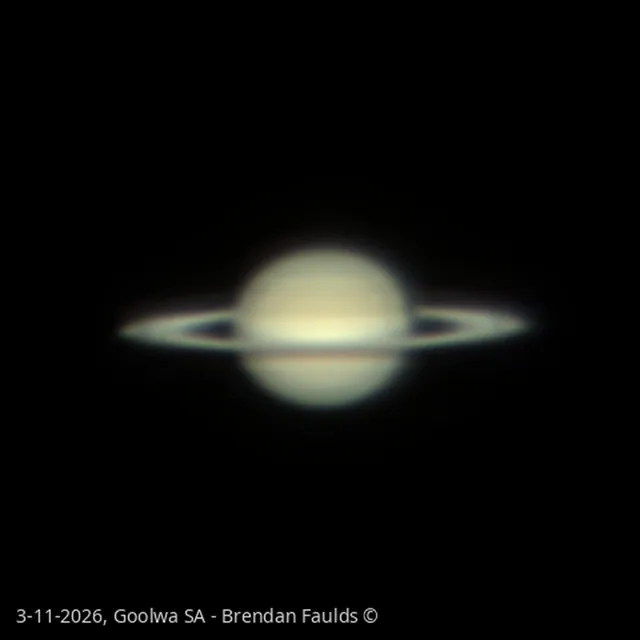
SESSION 24 · 11/26 · WORKED
Saturn on the 127 with the ZWO, at 20 ms and gain 335, near its highest. The planet drifted out of the frame all night even with tracking on, and the stacker had to chase it. Twenty-four recordings…
LEARNED IT · 10/26
The first Saturn stacks from the ZWO came out as white, colour-fringed blobs. The same recordings, put through a proper planetary chain, showed the ring gap, the ring shadow and a belt. Selection at…
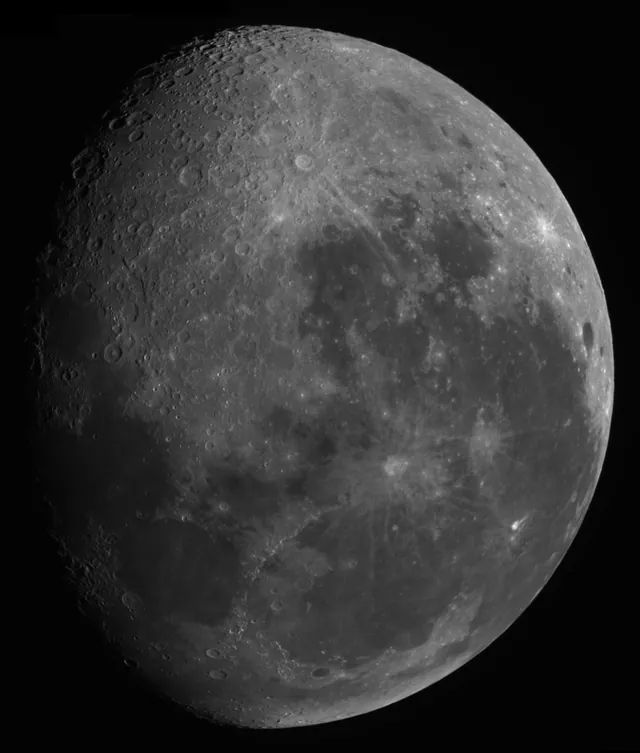
SESSION 23 · 10/26 · WORKED
First night with the ZWO ASI662MC, on the 127 Mak with the SV205 moved to the finder. Saturn came out soft in sixteen recordings, which I blamed on my focus; the numbers said seeing. After midnight…
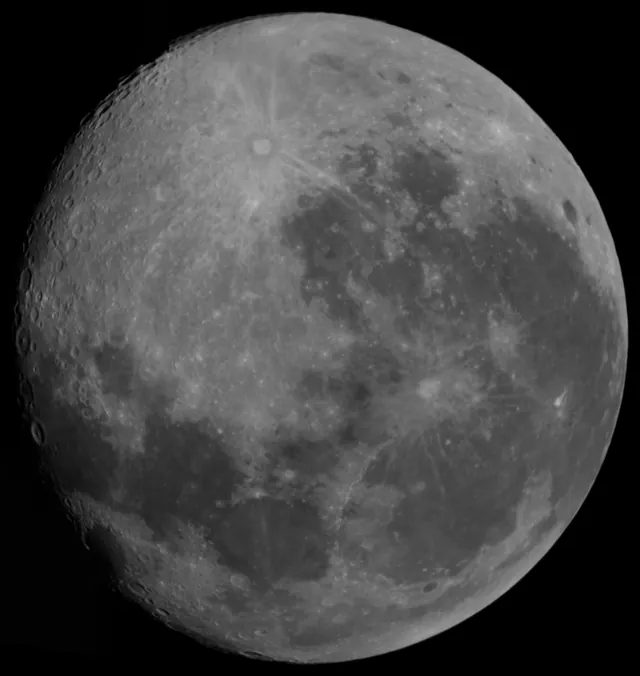
SESSION 22 · 10/26 · WORKED
Two nights in one entry. 26/10 clouded out. On 27/10 the Moon came up behind the verandah and into cloud, and an 8x5 at 23:00 got the lower two thirds before power lines blacked it out. At dawn…
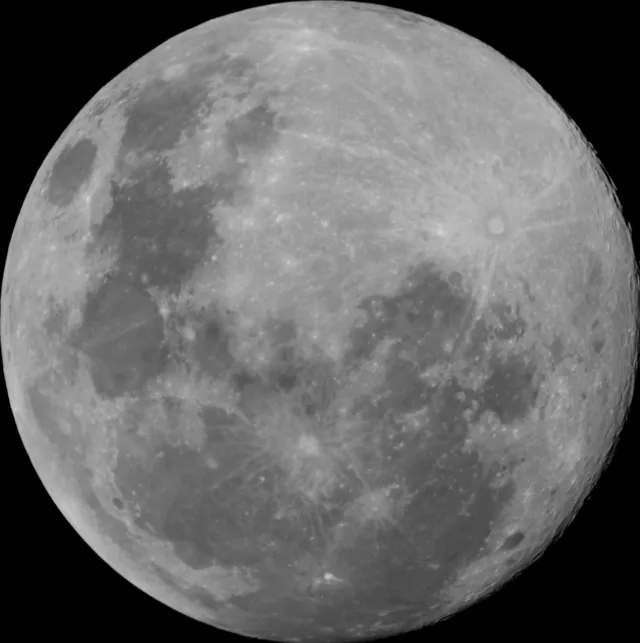
SESSION 21 · 10/26 · WORKED
A day before full, on the 127 Mak and the AZ-GTi, in wind. The laptop ran out of power mid-session and the mount found the Moon again from where it had stopped. A 7x5 mosaic at 14 ms and a patch…
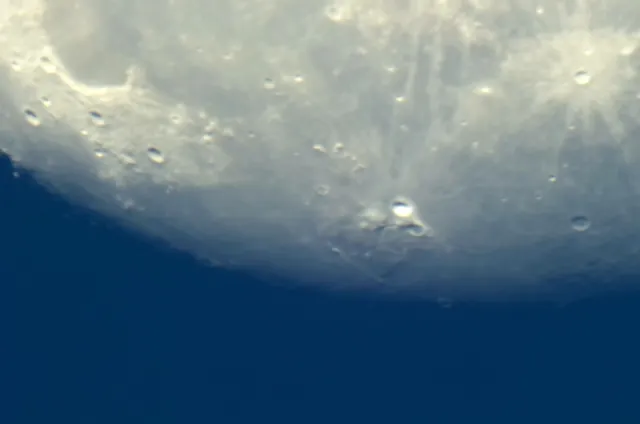
SESSION 20 · 10/26 · DIDN'T WORK
A 91% gibbous Moon on the 127 Mak and the AZ-GTi. The finder-to-Mak offset from last week worked first time, focus was good and one 300-frame run stacked cleanly. Then three mosaic attempts in forty…
NOTE · 10/26
Written the day after two 43-panel runs each missed most of the half Moon. Every goto that night landed within two arcseconds. The tiles were in the wrong place because the grid was laid out around…
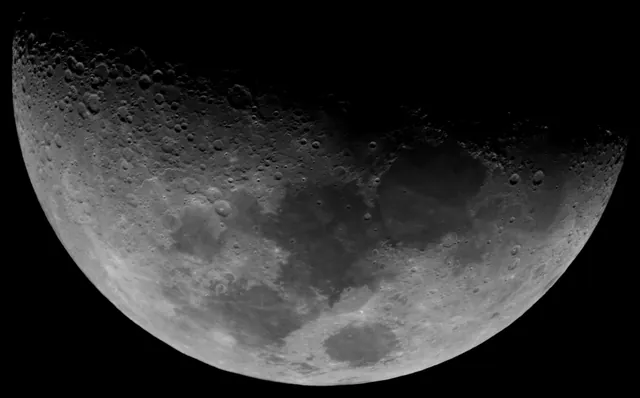
SESSION 19 · 10/26 · PARTLY WORKED
The best sky of the spring. Two 43-panel lunar mosaics on the AZ-GTi, 128 GB each, every goto within two arcseconds, but each grid missed most of the Moon; stitched together, the two make a complete…
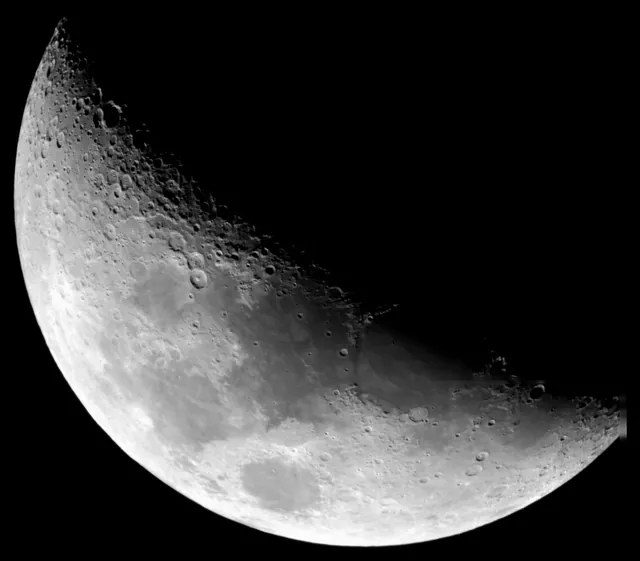
SESSION 18 · 10/26 · PARTLY WORKED
Codex rebuilt a lot of rig-ui during the day and helped drive the evening until its usage limit cut it off at 20:04. I shot the 7x4 mosaic myself at 20:28. It ran to 25 panels, but the grid sat too…
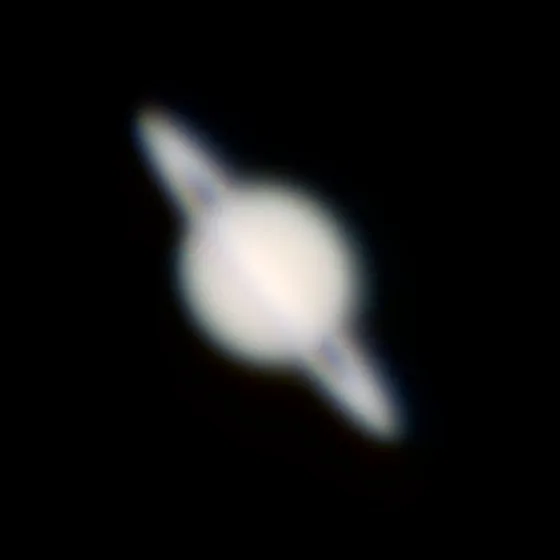
SESSION 17 · 10/26 · WORKED
An AstroDMx night with the 127 on the AZ-GTi and no agent driving: 38 runs of 50 full-size frames, the crescent from 19:29 and Saturn from 21:19. Codex could not reach the rig from its sandbox and…
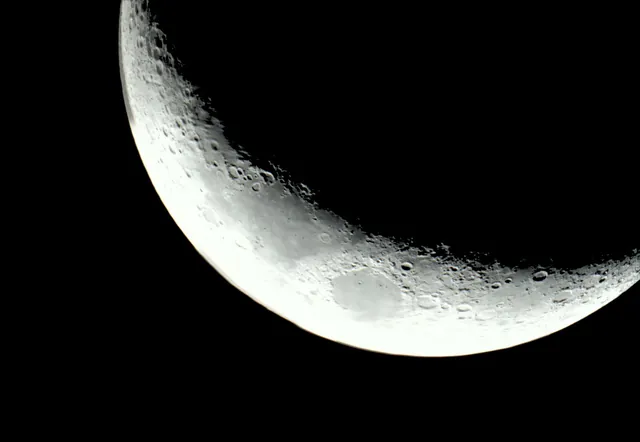
SESSION 16 · 10/26 · PARTLY WORKED
The 127 on the AZ-GTi, run from the mount's hotspot. A 35-panel crescent mosaic at 19:44, anchored 11 arcminutes off the disc centre with a new shift option; a second, softer one after the image…
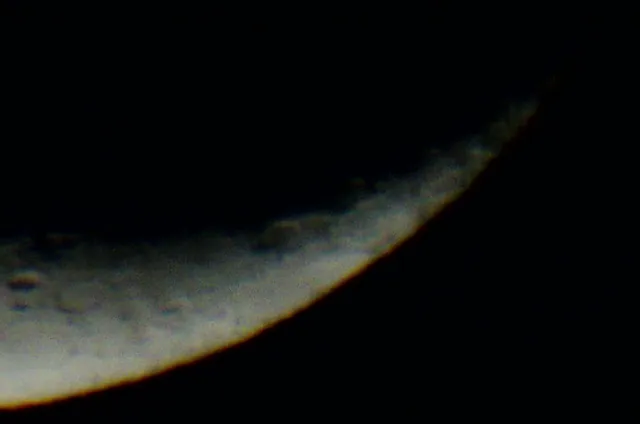
SESSION 15 · 10/26 · PARTLY WORKED
A night of near misses with the 127 and the AZ-GTi: the mount's WiFi link lost half its packets, the house power went out, the finder-to-Mak offset turned out to be more than a degree and a…
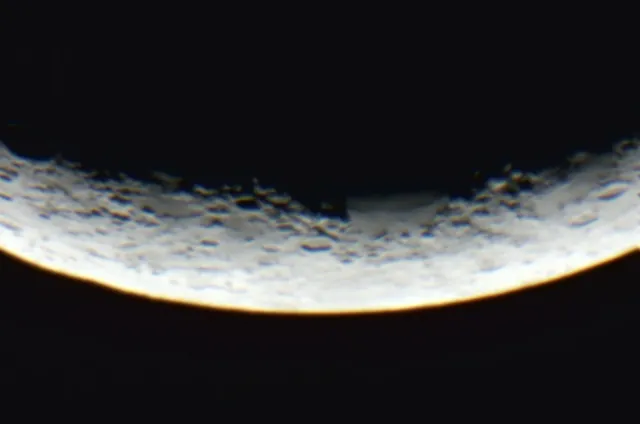
SESSION 14 · 10/26 · PARTLY WORKED
The 127 Mak's first frames of sky: an 8% crescent at 15 degrees, hand-pointed and untracked, craters along the terminator in a 50-frame PNG run. The AZ-GTi never spoke to the laptop all night - its…
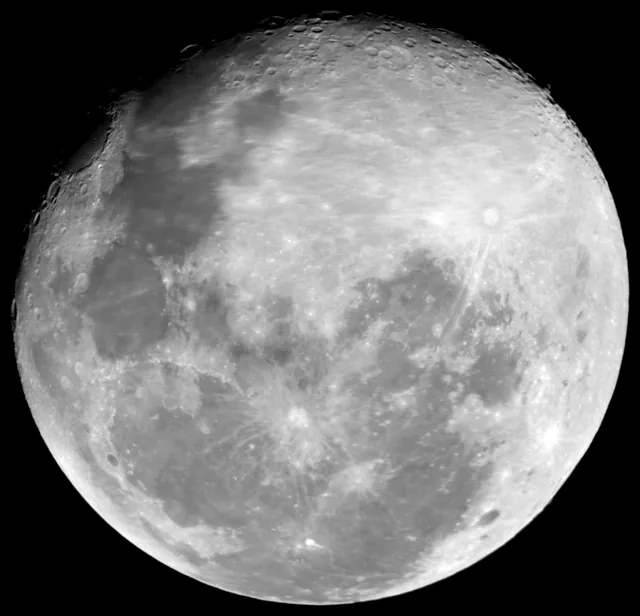
SESSION 13 · 09/26 · WORKED
A complete Moon at last - 24 panels, 100% of the sunlit disc, measured and not just looked at - and my first Saturn, rings and all, in a single overexposed frame. On the way: a spiral search built…
SESSION 12 · 09/26 · PARTLY WORKED
Best image yet and still 11.8% of the sunlit disc missing. Three launches, a plate scale that had been 15% wrong all along, and a centring error of 8'.
SESSION 11 · 09/26 · WORKED
The best sky in weeks, and two hours lost to a mount that talked happily and would not turn. Saturn is a fortnight from opposition.
NOTE · 09/26
Out in a gale this afternoon with the Moon sitting at 55 degrees in a blue sky, and the first thing the camera gave me was a completely white screen while I could see the Moon perfectly well through…
NOTE · 09/26
The one job left from 19 September. Written down before I start because it involves unbounded motion, and the whole point is to do it somewhere I can watch it rather than at 21:00 on the one clear…
NOTE · 09/26
Written down properly after the 19 September run, because the method now has enough moving parts that I will not remember which order they go in, or why half of them are the way they are. This is…
LEARNED IT · 09/26
Syncing on the Moon in the SynScan app corrects the firmware's pointing model, which is what GOTOs use. A script that reads raw axis counts never consults that model, so the sync is invisible to it.…
LEARNED IT · 09/26
An offset goto carries its own stopping condition — a step count the motor controller counts down to zero. A slew-rate command carries none: it runs until something else stops it. That difference…
LEARNED IT · 09/26
Every goto stops firmware tracking and nothing restarts it, so each mosaic panel is exposed with the mount standing still while the Moon runs at 13 arcseconds a second. At 0.222 arcsec per pixel…
SESSION 10 · 09/26 · PARTLY WORKED
I went out in a gale to do one job: make the mount keep following the Moon while a panel is being exposed. That job is done, measured, and finished. Almost everything else about the evening went…
SESSION 9 · 09/26 · PARTLY WORKED
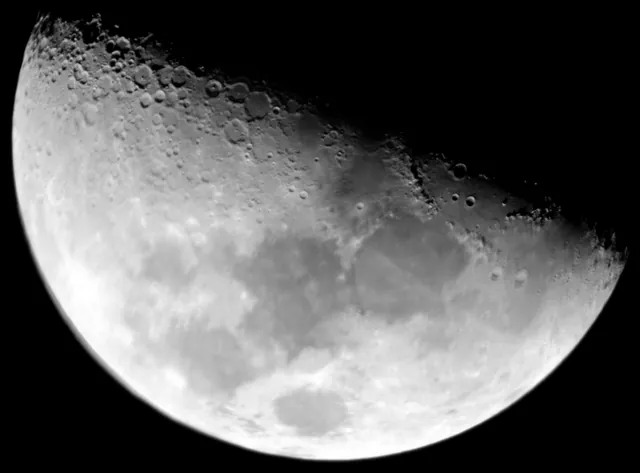
The night I found out the mosaic was never going to work the way it was built. Every goto landed within an arcsecond — seventy-two panels across two grids — and the tiles still did not line up…
SESSION 8 · 09/26 · WORKED
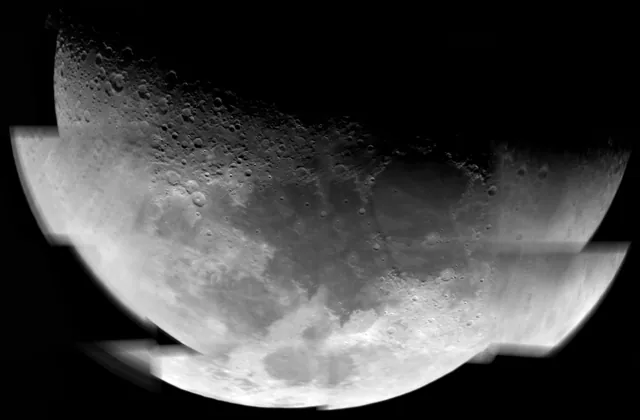
The night the laptop drove the telescope. INDI could connect but never finish a goto, so the mount went on raw motor-controller commands instead: a 0.05 degree test that landed to one arcsecond…
SESSION 7 · 09/26 · WORKED
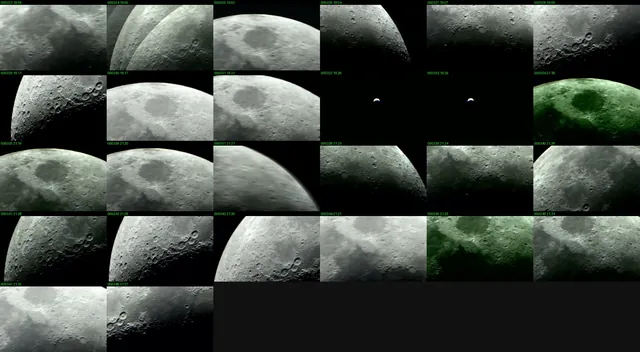
Four and a half hours between first question and first frame, almost none of it spent on the sky. A new five-metre USB cable that would not enumerate, an altitude limit I had set and forgotten, a…
NOTE · 09/26
Checked what the Moon was doing tonight and decided not to bother. Then it clouded over. First time a decision not to observe has been confirmed by the sky an hour later.
LEARNED IT · 09/26
A phone compass points at magnetic north. At Goolwa that is about 8 degrees east of true north, and an alt-az goto inherits the error whole. Measured it at 7.4 degrees by centring Venus by hand and…
LEARNED IT · 09/26
Dropping AstroDMx from 3264x2160 to 800x600 shrank the files fifteen-fold, shrank Venus threefold, and left the frame rate exactly where it was. The camera downscales the whole field instead of…
LEARNED IT · 09/26
Scrolling through a SER in Siril shows single raw frames, and at 0.22"/px a single raw frame of a planet can never look crisp. Stacking picks the lucky frames, averages the noise out, and only then…
SESSION 6 · 09/26 · WORKED
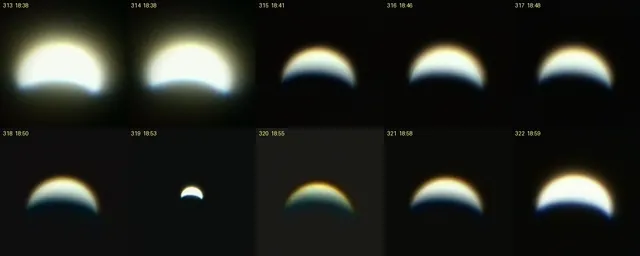
Lost the first hour and a half to a pointing error I have been guessing at since 30 August and finally measured: 7.4 degrees of azimuth, which is Goolwa's magnetic declination. Two false trails, a…
SESSION 5 · 09/26 · WORKED
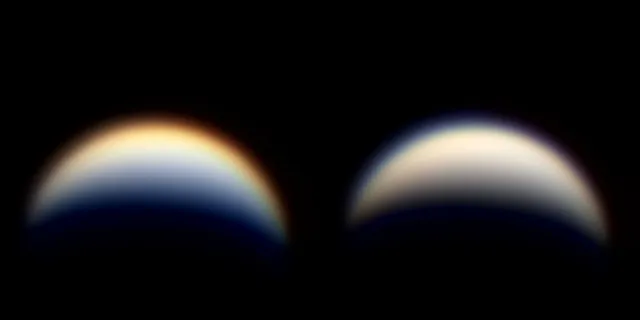
First proper Venus: a 31% crescent, 35 arcseconds across, lit side to the horizon. Confirmed the image scale off the disc, measured the dispersion, and then argued with the numbers about whether it…
LEARNED IT · 09/26
At f/18.4 diffraction alone smears an edge over ~10 px. Barlowing the 76/700 spreads the same detail over 2.5x more pixels and adds nothing — while costing brightness and frame rate.
LEARNED IT · 09/26
A target at 50 m needs about 10 mm more outward focuser travel than infinity. Run out of travel on a streetlight and you'll wrongly conclude the camera can't reach focus at all.
LEARNED IT · 09/26
Set the output path from a script, changed it later in the GUI, and forgot. Nine SER runs went to ~/Pictures under the prefix "testing" while I searched an empty AstroDMx_DATA and concluded nothing…
SESSION 5 · 09/26 · DIDN'T WORK
Got the 76/700 on the mount and pointed it at nothing successfully. Cloud, a finder I never aligned, and a field of view the size of a keyhole. The morning's daylight testing is where the actual…
LEARNED IT · 09/26
"Airmass 8" is not eight atmospheres. It is one atmosphere crossed at a slant. Two separate things decide how much of it you look through: the Moon's declination caps how high it can ever get from…
LEARNED IT · 08/26
Laplacian variance rewards high-frequency content, and noise IS high-frequency content. Stretch a dim frame hard and it becomes pure amplified noise, which the metric scores as spectacular detail.
LEARNED IT · 08/26
Every automatic sharpness measure found a different way to reward something other than sharpness. Judging by whether crater rims are actually resolved beat all three.
NOTE · 08/26
Stood out the back staring at an empty sky wondering what I'd broken. Checked the settings. Checked the exposure. Checked the histogram — a single spike jammed hard against the left edge, no light…
NOTE · 08/26
Lining up on Venus is the hardest part of the night by a distance. There is no finder scope on this telescope at all, so aiming means eyeballing along the tube and then hunting blind across a 46' x…
LEARNED IT · 08/26
A low target is looked at through more air. Beyond blurring, the atmosphere acts as a prism and smears bright objects into a spectrum — a defect no focusing can reach.
LEARNED IT · 08/26
The Moon overflows the sensor by 28 px. Area-to-radius, centroid alignment and radial profiles all assume a whole circle, and all return plausible wrong numbers instead of failing.
LEARNED IT · 08/26
Dawes limit at 76 mm is 1.53\", which is 2.8 km on the Moon. Focus, stacking and deconvolution all work below that ceiling, never through it.
LEARNED IT · 08/26
Every calculation from the first session was wrong because the scope was recorded as a 114/500 and it's actually a 76/350.
LEARNED IT · 08/26
Moonrise slips ~50 minutes per night. A black frame and a flat histogram look exactly like a broken rig, and the check that rules it out is free.
LEARNED IT · 08/26
Captures file into ~/AstroDMx_DATA/<Object Name>/<date>/. Swing to a new target without changing that field and the archive quietly mislabels everything.
SESSION 4 · 08/26 · DIDN'T WORK
Pointed at Venus instead of the Moon on the rebuilt mount. Three short runs so far. Learned that most of what limits a low planet has nothing to do with the telescope.
SESSION 2 · 08/26 · WORKED
Built a processing stack and tried to rank the night's runs by sharpness. Every metric disagreed with my eyes. The bug wasn't in the metrics — it was that the lunar disc runs off the edge of the…
SESSION 3 · 08/26 · PARTLY WORKED
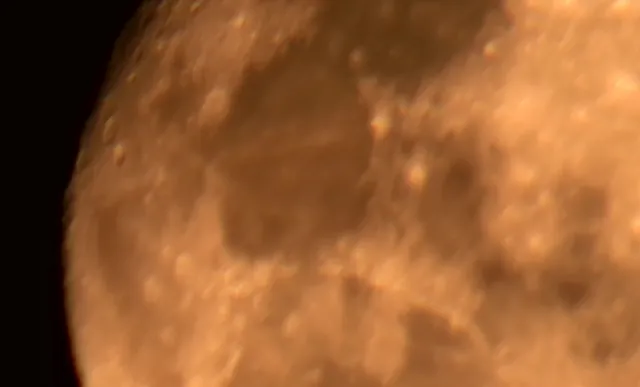
Three changes at once before tonight: the mount is rebuilt onto a friction-loaded roller-bearing swivel, the focuser has a long lever instead of a knob, and I'm setting up out the back away from the…
LEARNED IT · 08/26
exposure_time_absolute is flagged inactive while auto_exposure is on. Writing to it succeeds and does nothing. No error, no warning.
LEARNED IT · 08/26
Exposure time is the only brightness lever the SV205 exposes. Don't go looking for a gain slider.
LEARNED IT · 08/26
On a USB 2.0 link the SV205 doesn't advertise its max-res YUYV mode at all. There's no error and no dropped-frame warning, so it reads as a camera limitation.
SESSION 1 · 08/26 · PARTLY WORKED
Got the SV205 talking to AstroDMx and the Moon onto the sensor. Burned most of the session on two failures that both presented as camera limitations and were neither.