SESSION 5 · 09/26 · WORKED
A real crescent, a rainbow I didn't ask for, and an argument about focus
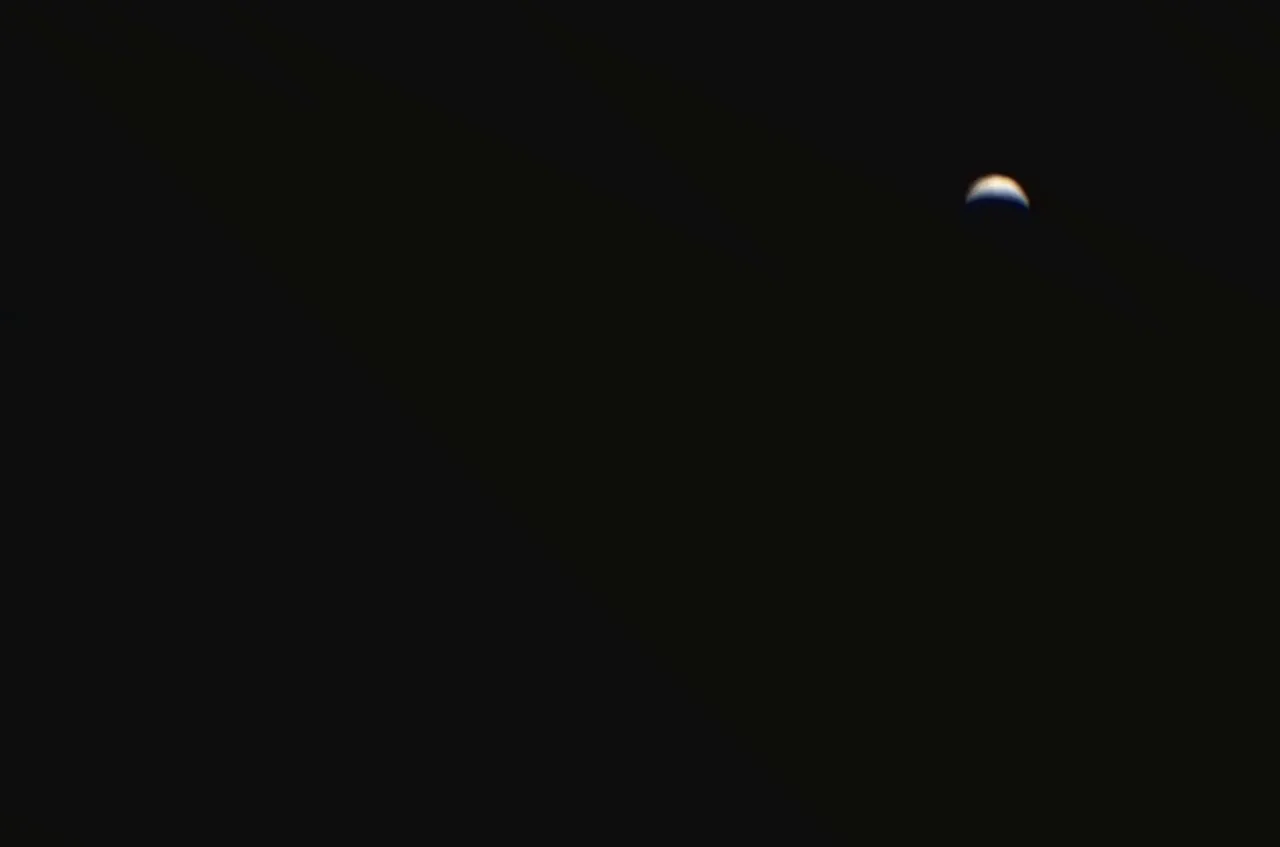
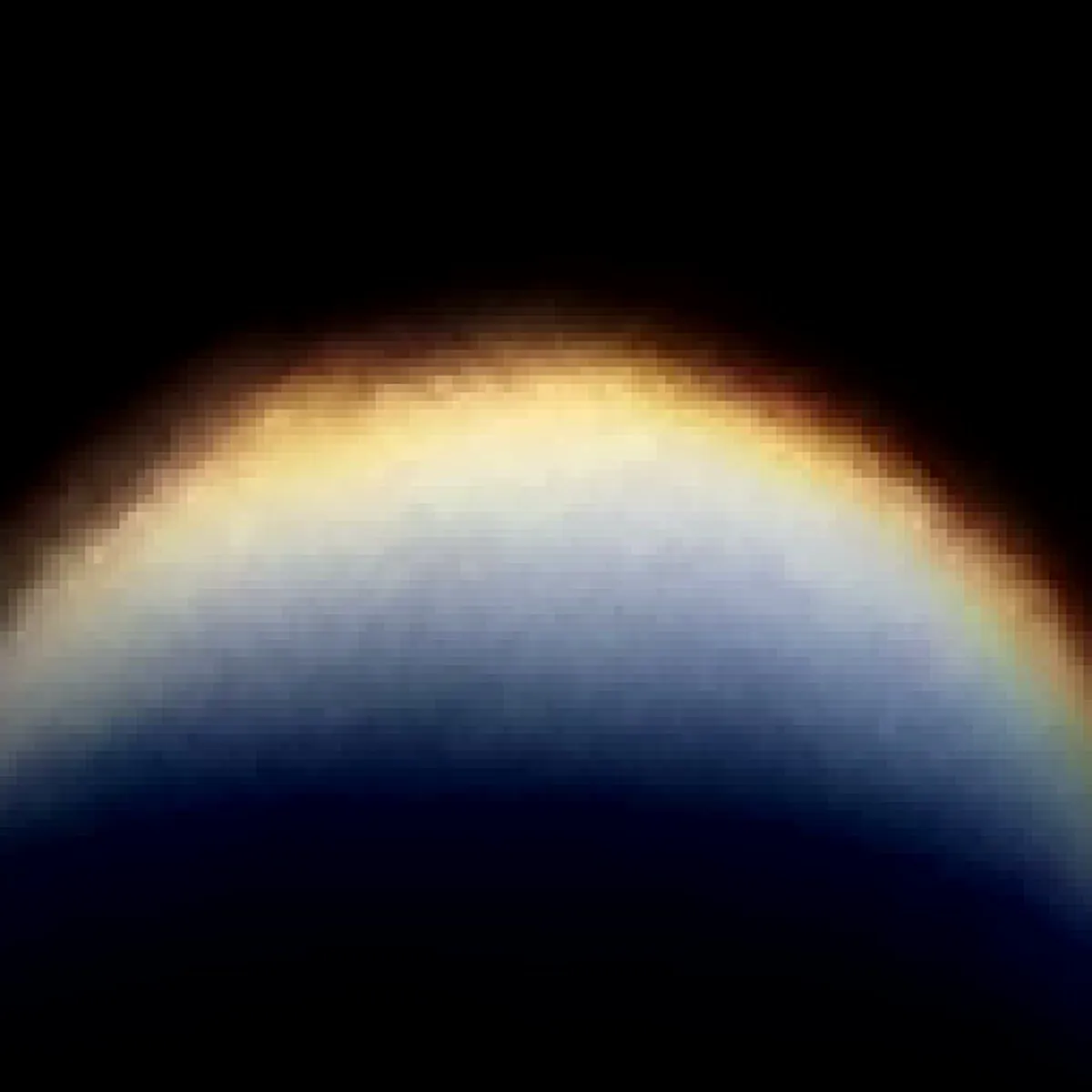
First proper Venus: a 31% crescent, 35 arcseconds across, lit side to the horizon. Confirmed the image scale off the disc, measured the dispersion, and then argued with the numbers about whether it was in focus. It was, near enough. The air was the problem.
Setting up
First proper night with the new kit, and getting set up was the hard part.
Alignment. Levelled, pointed the tube north, told the app to go to Venus. It wasn't close. So I found Venus by hand instead — the red dot finder worked far better than I expected — and centred it myself. Two likely reasons for the miss, to test next time: the phone compass points at magnetic north, and at Goolwa true north is about 8 degrees east of that; and a north-level alignment trusts the tripod to be level to within a degree. The fix once Venus is centred by hand is to tell the app so — a sync or one-star align on Venus — and every goto after that inherits the correction. I didn't, so any later goto would have missed by the same amount.
The phone UI. Still don't really understand it. Fiddled.
Wifi. The mount joined the home wifi from out the back, so the phone drove it and the laptop captured, both on the same network. That part just worked.
Eyepiece first. Focused by eye with the eyepiece and it looked good. Should have had a second look with the other eyepiece, but I was keen to get the camera on. Camera on, refocus on the screen.
Tracking. The mount tracked Venus well and I don't understand how, so I must have fluked it. Except it isn't a fluke. Goto needs the alignment to be accurate; tracking only needs it to be roughly right. Once the mount believes it is on Venus it drives both axes at the rates Venus needs, and those rates come from where Venus really is in the sky, not from where the mount thinks it is pointing. A few degrees of pointing error changes them by a hair. That is why the same alignment missed the goto and nailed the tracking.
The runs
Fifteen runs between 19:10 and 19:52. Three FITS, then twelve SER once I switched formats. All 100 frames, all 7 seconds, all still with Auto WB on and Object Name unset — the two fixes I wrote down on 30 August and did not make.
| run | time | format | exposure | best edge | median edge |
|---|---|---|---|---|---|
| 000100 | 19:10 | FITS | 16 ms | 2.0" | 2.5" |
| 000200 | 19:12 | FITS | 16 ms | 2.5" | 3.5" |
| 000300 | 19:13 | FITS | 50 ms | 3.5" | 4.2" |
| 000301 | 19:14 | SER | 40 ms | 3.4" | 4.0" |
| 000302 | 19:15 | SER | 29 ms | 2.6" | 3.2" |
| 000303 | 19:34 | SER | 29 ms | 2.8" | 3.3" |
| 000304 | 19:35 | SER | 29 ms | 3.2" | 4.0" |
| 000305 | 19:35 | SER | 29 ms | 4.6" | 5.3" |
| 000306 | 19:35 | SER | 29 ms | 3.5" | 4.1" |
| 000307 | 19:42 | SER | 11 ms | 2.4" | 3.0" |
| 000308 | 19:42 | SER | 3 ms | 1.7" | 3.0" |
| 000309 | 19:43 | SER | 70 ms | 3.4" | 3.6" |
| 000310 | 19:43 | SER | 100 ms | 3.7" | 3.9" |
| 000311 | 19:44 | SER | 500 ms | 4.5" | 4.8" |
| 000312 | 19:52 | SER | 38 ms | 3.8" | 4.4" |
"Edge" is how far the sunlit limb takes to go from 10% to 90% brightness, measured on the green channel. It is the one hard edge Venus has, so it is the sharpness metric for the night. Lower is sharper. The diffraction limit of a 102 mm scope would put it at about 1.1".
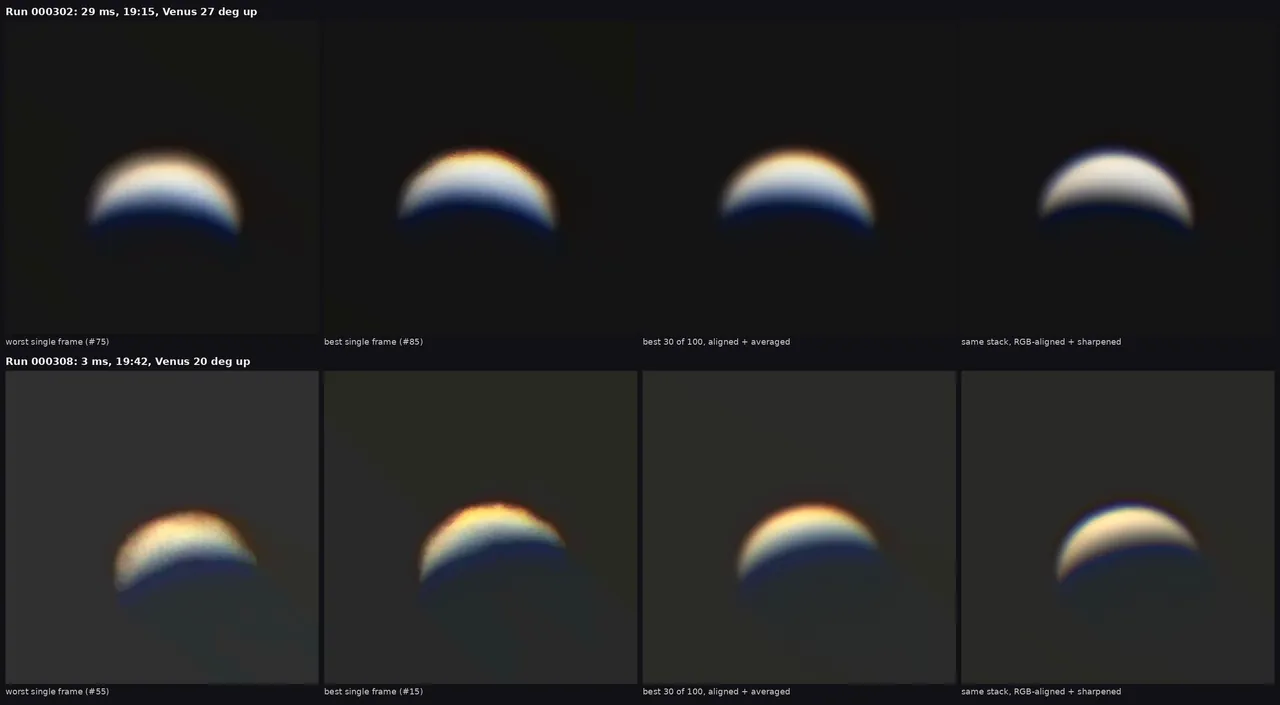
Exposure. 16 ms peaked at 147/255. 29 ms peaked at 232/255, which is the ceiling. The exposure bracket at 19:42 settled it: 70 ms and up is clipped flat at 255, and the 500 ms run is the softest thing shot all night because half a second of boiling air ends up in every frame. The other way is more interesting — 3 ms gave the sharpest frames of the night, 1.7", at 20 degrees altitude, with a peak of only 100/255. Short exposures freeze the seeing. Underexposed and sharp beats bright and smeared, and the stack can recover the brightness.
What was actually in the frame
A 31% crescent, 35.0" across. Venus tonight: 0.476 AU away, 42 degrees from the Sun, six weeks out from inferior conjunction. Lit side toward the horizon, horns pointing up, which is exactly where the Sun was relative to it.
The scale is confirmed at 1300 mm, off the planet itself. A circle fitted to the limb gives a 155 px disc. At 1300 mm and 1.4 µm pixels the ephemeris predicts 158 px. That is 0.222"/px, and it is the first time a number in this log has been checked against something in the sky rather than derived from a spec sheet. The crescent thickness came out at 50 px against a predicted 49. It all fits.
The drift is nearly gone. 23 px in 7 seconds, about 3 px/s, against 17 px/s on the old swivel. The frame now holds Venus for something like fifteen minutes. Seven-second runs are absurd on a tracking mount. That is the single biggest thing to change next time.
The rainbow
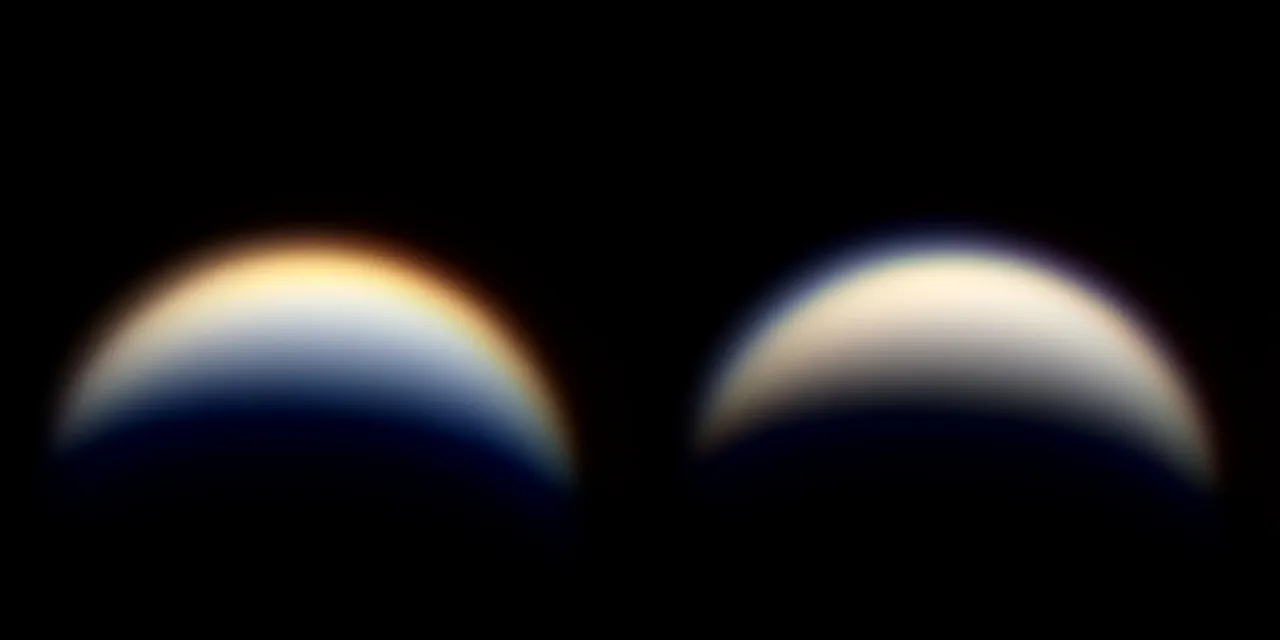
Red on the top limb, blue on the terminator side. Red, green and blue images of the planet sit 6.6 px apart vertically, which is 1.5 arcseconds — the amount the atmosphere is expected to smear a spectrum at 27 degrees altitude and airmass 2.2.
Shifting the red and blue channels back onto green in software removes most of it (key image, right). That is a cheap stand-in for an ADC and both AutoStakkert and Siril have a button for it. It will not recover the detail that was smeared within each channel, which is why blue came out the softest of the three.
Sunset was 18:00. I started at 19:10. Venus was at 27 degrees and falling. At 18:00 it was at 42, and it is bright enough to shoot with the Sun still up. An hour of waiting for dark cost me a third of the altitude, for a planet that does not need dark at all.
The focus argument
It looked out of focus to me on the screen. The first pass of numbers said it was seeing: the limb edge width more than doubled between the best and worst frames of a single 7-second run, 8 px to 17.5 px, and a missed focus does not do that — it puts a floor under every frame.
That was only half right. The spread proves seeing is present. It does not prove the floor underneath is seeing rather than a small defocus, and fitting both blur shapes to the limb profile showed the data genuinely cannot tell them apart below about 1.5" — which is 0.1 to 0.15 mm at the focuser. A Mak with mirror shift can miss by that without trying.
So I bracketed, by eye on the screen: good, a bit left, a bit right and then some, back to good. Three-second-ish runs each.
| position | best edge |
|---|---|
| good (000303) | 2.8" |
| left a bit (000304) | 3.2" |
| right, and then some (000305) | 4.6" |
| back to good (000306) | 3.5" |
Good won. Left cost a little, right cost a lot, and if the two steps were equal the true minimum is maybe a third of a step toward left. Back-to-good did not quite return to the first number, which is backlash or the seeing moving in the sixty seconds between.
The steps were too coarse — one step moved the blur by a whole seeing-width. And by 19:35 Venus was at 22 degrees, so everything in the bracket is worse than the 19:10 run without the focuser being touched. The altitude penalty was larger than anything the focus knob did.
Results
Success. A real crescent with the right phase, the right size, and a measured scale. No surface detail because Venus has none in visible light, but the limb is clean once the channels are aligned.
The bracket says focus was at or near the minimum. The softness I could see was 2.2" of seeing at low altitude, sitting on top of a 1.1" diffraction limit. Next time the focus check happens on a star — Alpha Centauri is up at 44 degrees and the goto app lists it as Rigil Kentaurus, not Alpha Cen, which is why it "wasn't in the database".
Packed up at 19:45. Sheds in the way of Alpha Cen, Saturn not up until late.
The morning after
Went through every SER in Siril and decided none of them was any good. Then worked out that Siril was showing me single raw frames, and that a single raw frame at this scale can never look crisp: the diffraction limit alone is a 5 px edge, seeing makes it 10 to 25 px, and Venus has no detail to show anyway. Stacked two runs to see what stacking actually does. It picks the lucky frames, averages the noise out, and lets the sharpening work. Written up in [[stacking-is-selection-then-sharpening]].
Also found, stretching the 3 ms run, a faint ghost copy of Venus below and to the left of the planet. Almost certainly an internal reflection off the camera window or filter. Harmless for now.
Raw data. Deleted the SER and FITS from the laptop on 12 September to free 30 GB. Not
archived: the archive script wants <Target>/<date>/ and AstroDMx wrote <date>/..., and
the night had been judged not worth restacking. Kept the fifteen capture logs, the snapshot
TIFF and the five keeper JPEGs in this log.
To fix
- [ ] Object Name →
Venus. Still filed underObject_Name. Two sessions now. - [ ] Auto WB off.
- [ ] Runs of minutes, not seven seconds. The mount tracks now.
- [ ] Shoot Venus at sunset, not an hour after. 42 degrees instead of 27.
- [ ] Sync on the first object found by hand, so the gotos after it land.
- [ ] Check the level and use true north, not compass north.
- [ ] Focus bracket on a star, with half the step size.
- [ ] RGB-align in the stacker until there is an ADC.
- [ ] Gamma 100 and in-camera sharpness 0, so the frames are linear and untouched. Check the log afterwards; some UVC controls do not stick.
- [ ] Exposure 3–10 ms, peak 150–200 of 255, never clipped.
- [ ] ROI around the planet if AstroDMx allows it: more frames per second and no more 2 GB files for 7 seconds.
- [ ] Bahtinov mask for the Mak. Focus on a star, done in one go.
- [ ] Mak outside 45 minutes before the first frame. Tube currents look exactly like seeing.
- [ ] Install PlanetarySystemStacker. Stack there, sharpen in Siril.
- [ ] Actually stack before judging a night.
What's next
- Venus weekly through October. The crescent thins and grows from 35" to nearly 60" by inferior conjunction on 24 October. Same time each week, at sunset, is a phase sequence.
- Saturn rises in the east in the evening, opposition 4 October, rings nearly edge-on. 45 degrees up by midnight.
- Moon back from 14 September. First quarter around the 18th sits 60–70 degrees high at 20:00, the best lunar geometry I will have had.