SESSION 20 · 10/26 · DIDN'T WORK
A gibbous Moon, and a grid that would not stay on it
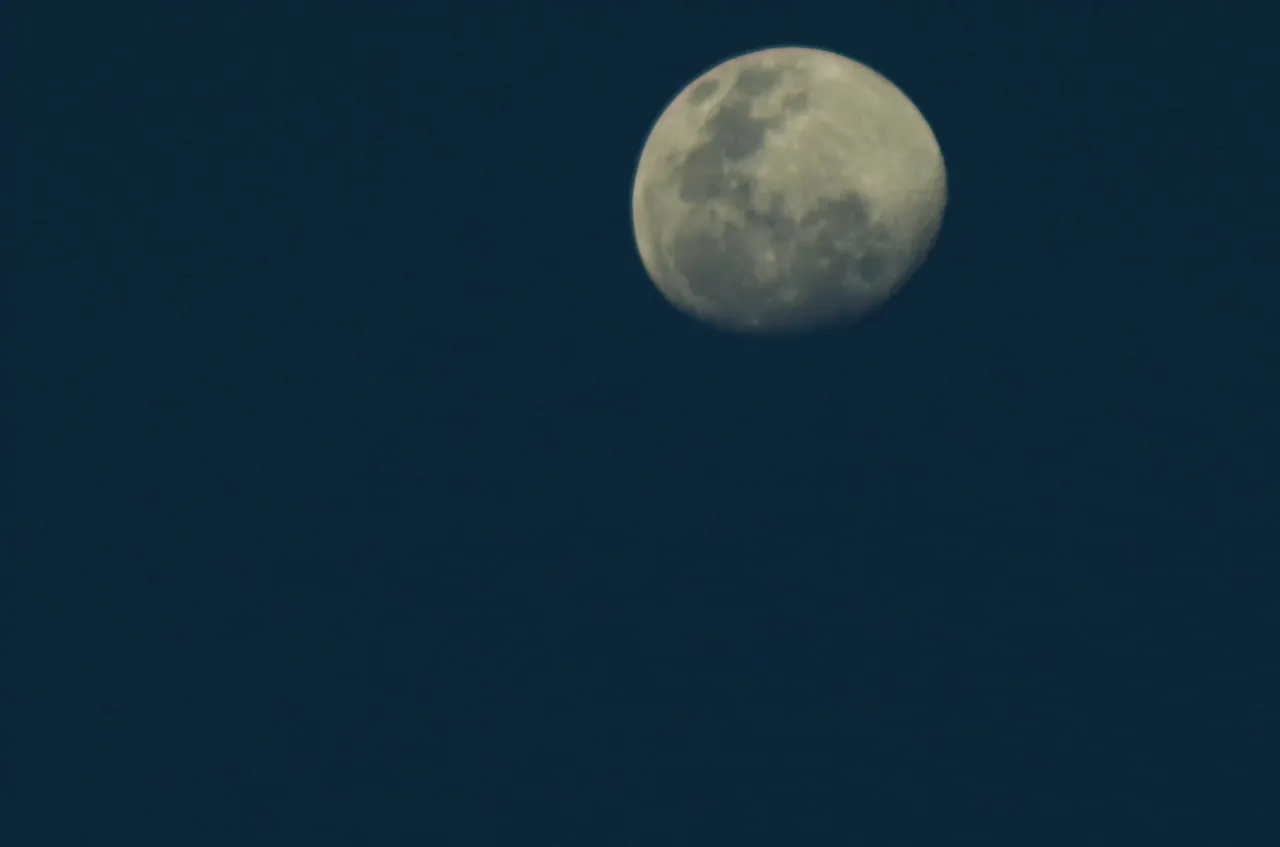
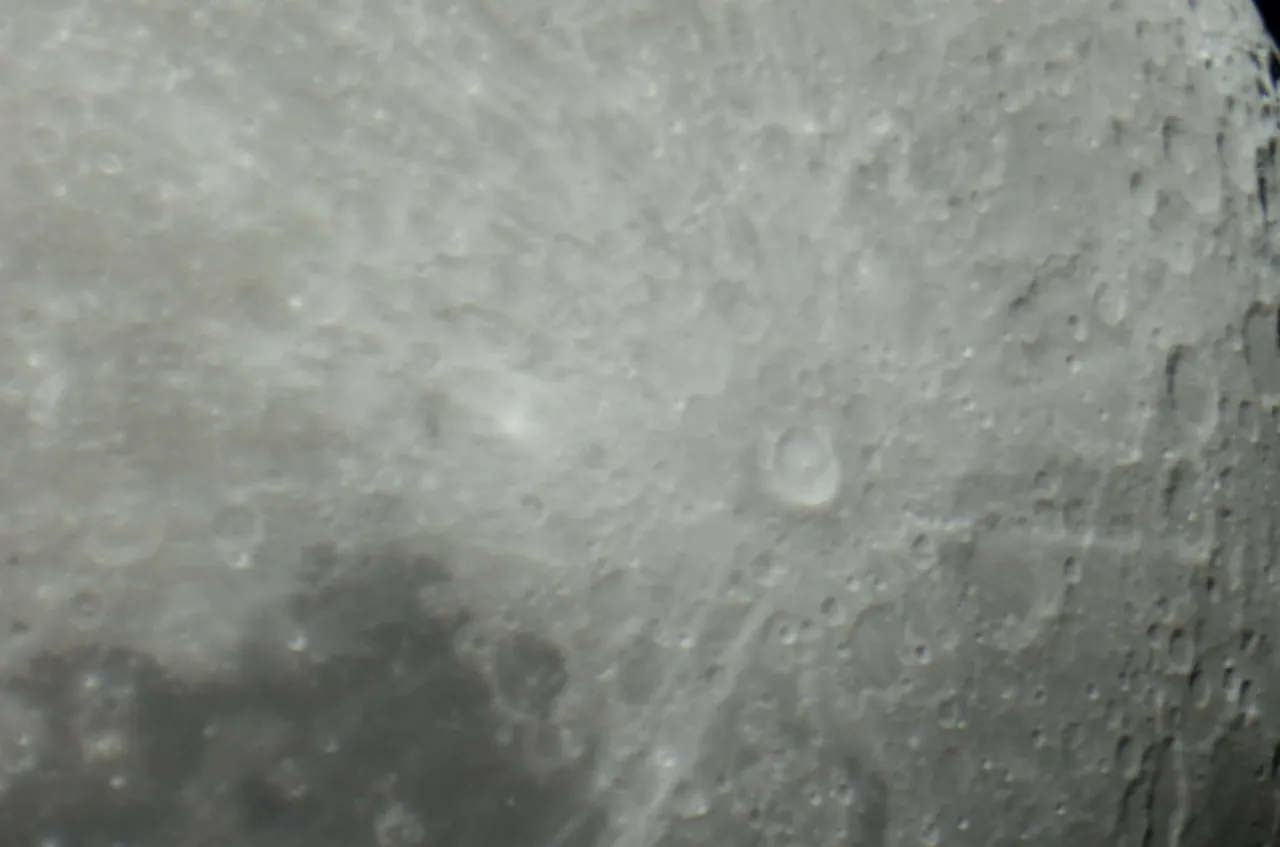
A 91% gibbous Moon on the 127 Mak and the AZ-GTi. The finder-to-Mak offset from last week worked first time, focus was good and one 300-frame run stacked cleanly. Then three mosaic attempts in forty minutes: the new disc-measuring mode lost the limb, a bug stopped the fixed grid from planning, and the two grids that did run walked off the Moon partway through. Cloud from about 20:10 finished it. I called it at 21:40.
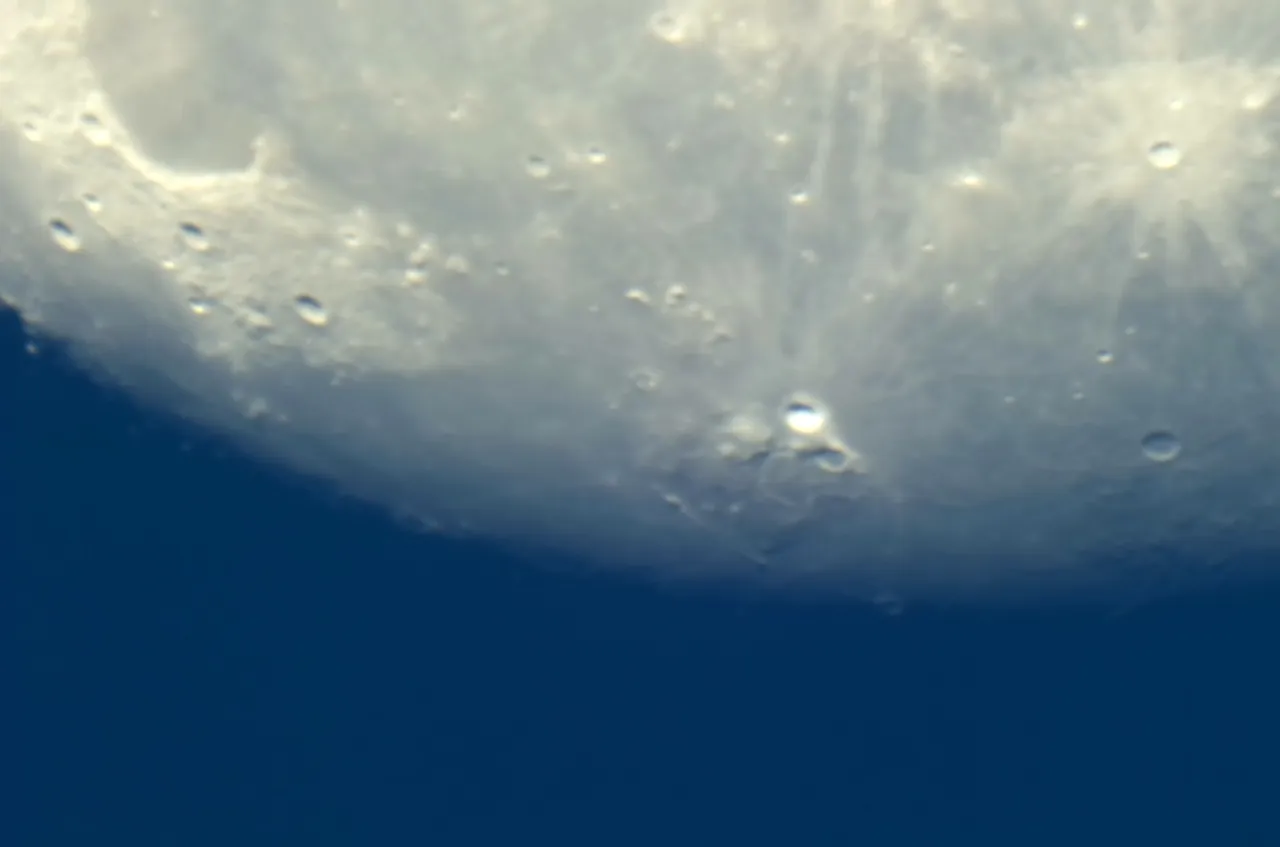
127 Mak on the AZ-GTi, on the mount's hotspot, the SV205 moved from the finder to the Mak at 19:21. The ZWO was not plugged in all night. rig-ui on the laptop, Claude driving it through rig.py. Clear at dusk, cloud from about 20:10, patchy until I gave up at 21:40. Written up the same night.
rig-ui was not running when I first opened the page in Chrome, which is the whole of why
"it doesn't work in Chrome". scope started it at 18:55.
19:13 to 19:28, finder to Mak in one move
Moon centred in the finder by hand (Freedom-Find caught the push and re-synced), then the camera into the Mak. The offset measured on 18/10, 11 arcminutes down and 11 left, put the Moon in the Mak on the first move. Second night running it has held, so it is probably the real boresight for this finder bracket, give or take five arcminutes.
It did not go quite that smoothly. When the page was switched to call the SV205 the main camera it was still in the finder, and the first "Mak" frame Claude moved for was the finder again (the whole Moon in 400 pixels gave it away). Claude moved back, I moved the camera, and the second try was the real one. Switching the camera's role in the page also wipes the finder boresight; it is in the notes and caught us anyway.
The Moon came up hugely out of focus. Focused by hand on the limb, focus score 1.6, crater rims crisp; what softness is left is seeing at 35 degrees.
| time | target | frames | exposure | size | result |
|---|---|---|---|---|---|
| 19:28 | Moon, a limb field | 300 @ 15 fps | 31.6 ms | 6.3 GB | stacked, best 75; the keeper |
| 21:16 | Moon, through a gap | 150 | 25 ms | 3.2 GB | cloud over most of it |
Exposure
Last time 30-33 ms was too short (highlights about 190). Tonight I wanted it nailed. Claude
measured it in lunar-mosaic's own capture path, not the live view, because the two
differ: a one-panel test at 40 ms gave the general surface a 99.9th percentile of 169 and
the brightest small crater 231. 45 ms (--exposure 450 --hold-exposure) then gave lit
panels peaks of 210-245, the limb highlands touching 255 in places. Never checked in a
stacked mosaic, because none finished. The Moon was at 33 degrees then; it will be brighter
higher up.
Three mosaics, none finished
19:33, disc-measured (the new default since 19/10): first the mount said both axes were
"not initialised", though they had tracked all evening; :F1/:F2 cleared it without
touching the counters. Then the disc measurement aborted: lost the limb while measuring the
camera orientation. One to two arcminutes of backlash on every reversal is enough to do it.
First time on the real sky, and it failed.
19:38, fixed 8x5 grid: Claude found the disc centre by hand from the limb on three sides
and re-aligned there. The plan crashed on a bug (a stray import numpy inside run()); fixed
in one line. The run then shot nine panels of black sky and stopped itself: "the grid is not
where the Moon is". The Moon was eight to ten arcminutes higher than the anchor by then.
19:47, fixed 9x6, wider margins: rows 1 to 3 came back on the Moon, 210-245 peaks, the limb where it should be. Then rows 4 to 6 went black and it stopped at 20:03 with 41 panels shot. The spiral search found the Moon at 20:08, 17 arcminutes up and 11 right of the model.
| start | grid | panels | exposure | size | result |
|---|---|---|---|---|---|
| 19:33 | disc-measured | 0 | 45 ms | - | aborted, lost the limb |
| 19:38 | 8x5 fixed | 9 | 45 ms | 15 GB | all sky, stopped |
| 19:47 | 9x6 fixed | 41 | 45 ms | 65 GB | rows 1-3 on the Moon, stopped at row 6 |
Why it kept missing. I aligned on the Moon at one point. One point cannot see the tripod's tilt, and lunar-mosaic aims every panel at the Moon's computed position plus one offset taken at the start. As the Moon moves across the sky that offset goes stale. Measured with the Moon in view, tracking drifted about 30 arcseconds a minute at 34 degrees, and by 21:35, at 52 degrees, the field was sliding off in a few minutes. Claude added a drift correction to lunar-mosaic (push each panel by a measured rate times the minutes since the start), but it never ran. Some of what looked like drift was cloud. Rows 4 to 6 of the 9x6 and a fifteen-minute search that found nothing were black frames, darker than the twilight sky earlier, which is cloud, not a mount pointing beside the Moon.
20:10 to 21:40, cloud
rig-ui was restarted for the drift change, tracking was off for a minute and the Moon slid out of the field. The search that followed found nothing in fifteen minutes because it was searching under cloud. Parked on the predicted spot and tracking, the Mak showed the Moon through thin cloud at 20:56, still in the field after 25 minutes. Clear spells after that lasted about a minute. I called it at 21:40.
What I got wrong
- Swapped the camera's role in the page before swapping the camera. Cost a wasted move and the boresight.
- Kept going after the first grid missed. Two more attempts with a one-point alignment, when the problem was the alignment.
- Read cloud as drift, or let Claude read it that way, for half an hour. Look up first.
What the software got wrong
- The disc-measured mosaic fails on real backlash, on its first night out.
- A numpy import inside
run()broke every fixed-grid plan. Fixed tonight. - Sky panels are shot twice: anything peaking under 200 is taken as a failed exposure and re-shot, 25 seconds wasted per panel of sky. A 9x6 has a lot of sky.
- The GTi on the hotspot reports its axes un-initialised even while it tracks.
Left for next time
- Commit or drop tonight's astro-rig changes (on
main, uncommitted): the numpy fix, and--drift-alt/--drift-azin lunar-mosaic with rig-ui passing them through. The drift option is untested on the sky. - A real alignment before any more mosaics. Two or three references spread across the sky, so the tilt is in the model, and lunar-mosaic needs to use that model rather than one fixed offset. Or re-centre from the image between rows.
- Fix the disc-measured mode's limb walk for 1-2 arcminutes of backlash: approach every measurement from the same side.
- Skip the exposure re-shoot on panels the lit gate expects to be mostly sky.
- Check 45 ms on a stacked mosaic, and expect to trim it higher in the sky and nearer full.
- Delete or keep the 80 GB of failed mosaic panels:
mosaic-2026-10-23-8x5-1938is nine panels of sky (15 GB) and is no use;mosaic-2026-10-23-9x6-1947(65 GB) has about a dozen lit panels from rows 1-3. Laptop at 259 GB free. - Full Moon is Monday 26 October, about 14:00. Tomorrow night still has a terminator; the 25th and 26th are a full disc in flat light.