SESSION 21 · 10/26 · WORKED
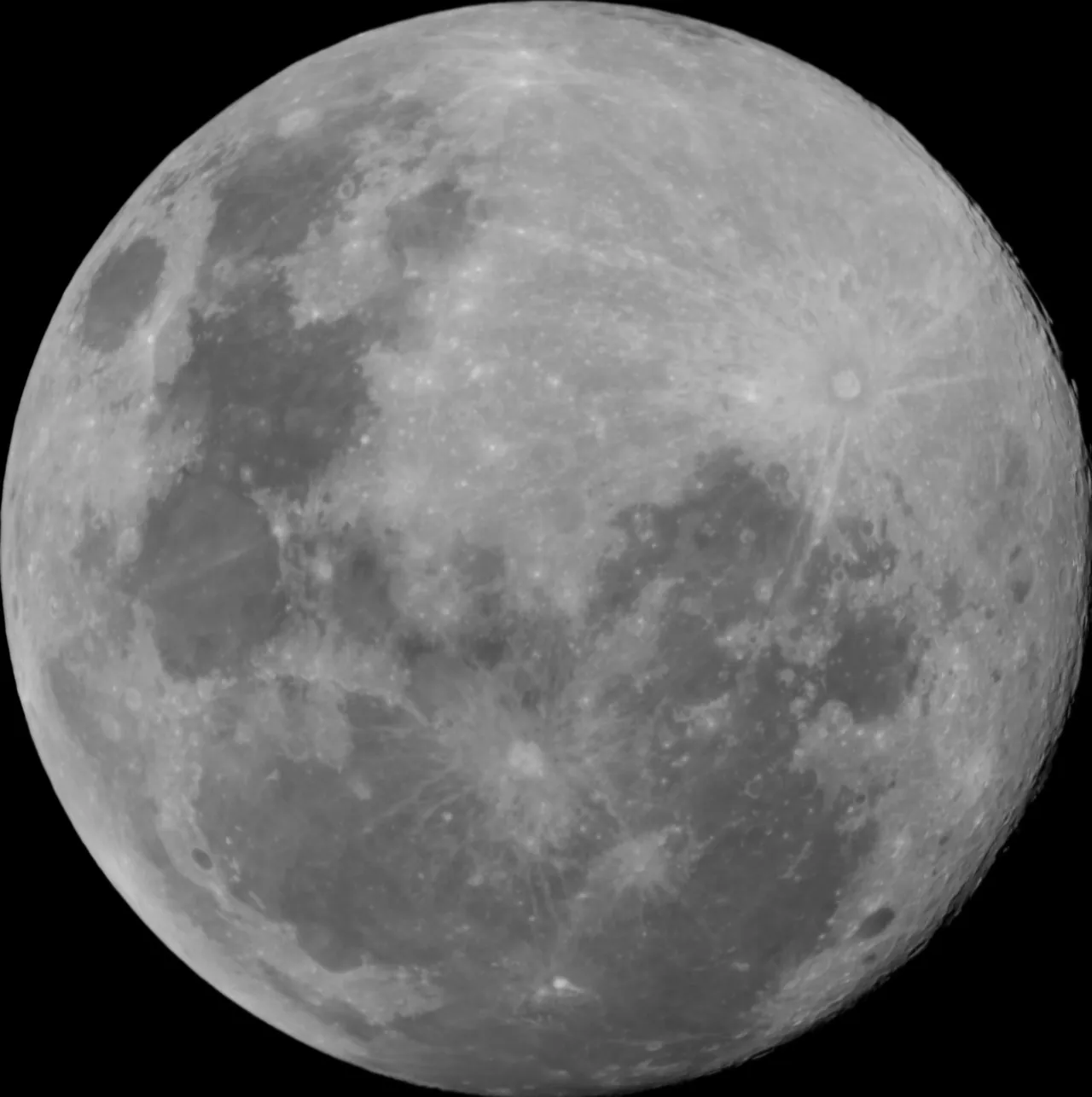
The whole Moon in one piece
A day before full, on the 127 Mak and the AZ-GTi, in wind. The laptop ran out of power mid-session and the mount found the Moon again from where it had stopped. A 7x5 mosaic at 14 ms and a patch along the top made the first complete, clean Moon from this rig. Three more grids after it: one walked off, one was too slow on the USB drive and was deleted, and combining all of them made the mosaic worse, not better.
127 Mak on the AZ-GTi, on the mount's hotspot, SV205 in the Mak. rig-ui on the laptop, Claude driving it through rig.py. Clear and windy. Moon 99% lit, 20 to 30 degrees up through the mosaics. Written up the day after, 26 October.
20:00 to 20:55, single runs and a clipped grid
Two single runs on the limb at 20:07 and 20:13, then a 7x5 mosaic at 20:22. 42 ms clipped 30% of the disc. A day from full, the highlands are 1.6-1.8 times brighter than the middle of the disc, and last session's 45 ms is far too long once the Moon is full and higher. The run was kept in case it could fill a gap later.
Then the laptop went flat. I'd forgotten to plug it in. The mount kept power, so its
encoders still knew where they were and rig-ui still had the Moon's last position: rig goto
moon put it within about 20 arcminutes and the glow in the frame led us the rest of the way.
Exposure, settled
Measured on panels, not the live view: 14 ms gave 0.00% clipped pixels on all 35 panels at about 25 degrees, and 13 ms later on. That is the number for a full Moon on this camera, about a third of what a gibbous needs.
21:18, the keeper
| start | grid | frames | exposure | panels | result |
|---|---|---|---|---|---|
| 20:22 | 7x5 | 200 | 42 ms | 35 | 30% clipped, kept as a spare |
| 21:18 | 7x5 | 200 | 14 ms | 35 | the keeper, sat about 4' low |
| 21:41 | 1x4 patch | 200 | 14 ms | 4 | top limb; two panels good, two off |
| 21:54 | 8x5 | - | 13 ms | - | aborted, bottom row mid-disc |
| 21:58 | 8x5 | 200 | 13 ms | 40 | whole disc but a sliver on the left |
| 22:21 | 8x5 | - | 13 ms | 15 | on ASTRO256, too slow, deleted |
| 23:22 | 8x5 | 90 | 13 ms | 40 | one panel right of the Moon |
The 21:18 grid sat about four arcminutes low and missed the top of the limb. The 21:41 patch along the top caught it in two of its four panels. The alignment was half an hour old by then and the other two were off. The two together stitched cleanly: 37 panels, 9102 x 9134, the whole disc, no seams. First complete full Moon from the 127.
Why the later grids missed
Wind and small moves. The GTi reports a 3-arcminute move done to the arcsecond, and the picture moves 60-80% of it. Out and back in altitude leaves about 1.3 arcminutes of backlash. Walking to the limb in small steps to find the centre gave garbage. What worked: fit the disc from one frame of the limb, at its known size, and make one move to the centre.
The grid follows the model, not the pointing. lunar-mosaic lays the grid around where the
alignment says the Moon is, and the shift options are relative to that. The 21:54 grid used a
stale alignment and put its bottom row in the middle of the disc. The drift was measured at
0.3 arcminutes a minute in altitude and 0.1 in azimuth, 20 arcminutes off after 45 minutes.
The recipe that worked at 21:58: limb fit, one move, re-align on the Moon, launch at once
with the drift correction from last session (--drift-alt 0.30 --drift-az 0.15). Its first
night on the sky, and it held for 40 panels.
The USB drive. The laptop was nearly full, so the 22:21 grid went to ASTRO256. It is exFAT over USB and writes at about 20 MB/s: four minutes per panel against 40 seconds on NVME-1. Fifteen panels took 57 minutes, the Moon walked off the grid, and the run was deleted.
The 23:22 grid, 90 frames to NVME-1, was quick (13 minutes) but fitted the centre from the top limb only and landed a panel to the right. Check two opposite limbs before launching.
More runs made it worse
I combined everything, 100 panels from four runs, expecting the overlaps to average into a sharper Moon. It came out softer, with ghost panel corners at the limb, one panel that would not link, and panel rotations stuck at the solver's limit. Runs an hour apart do not average: the Moon has rotated and the seeing has changed. Use a second run to fill a gap, not to stack over the first.
05:15, dawn
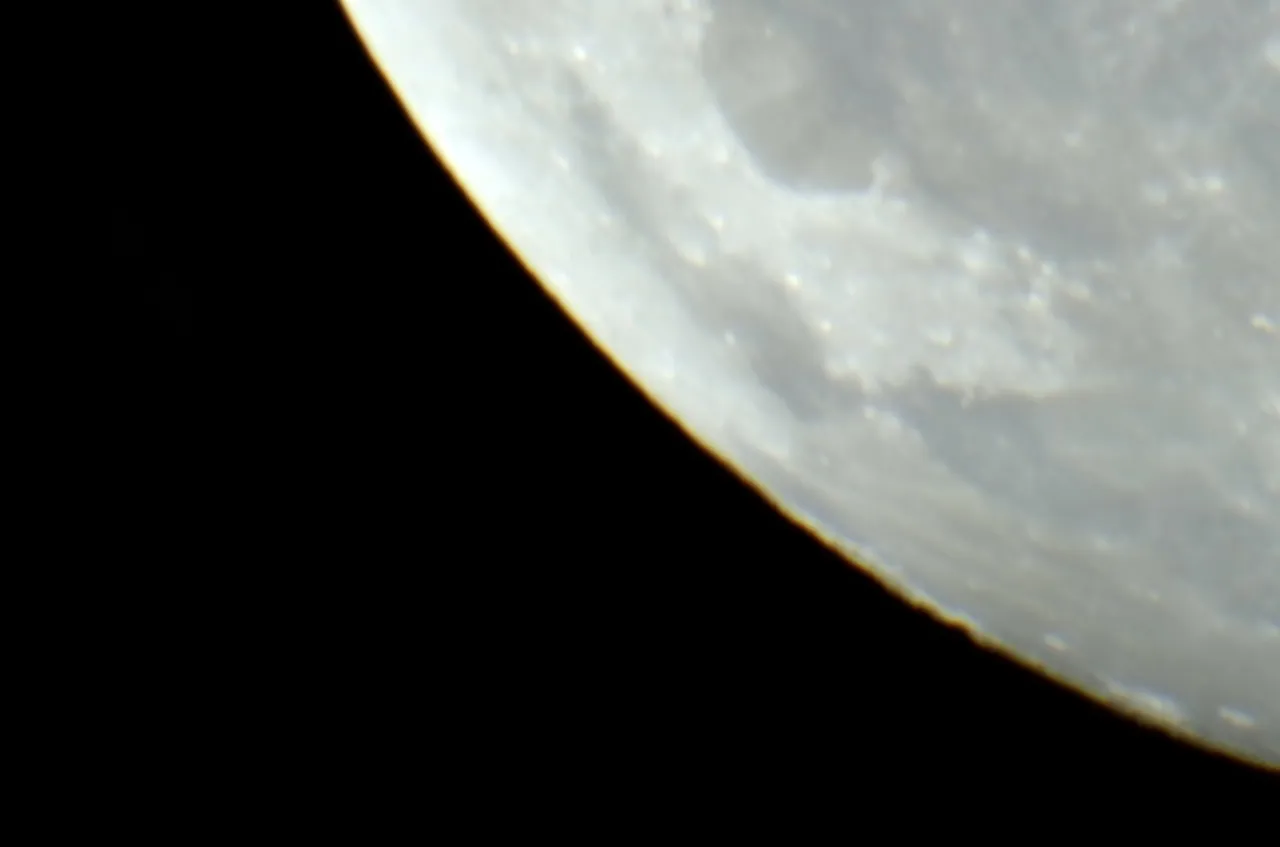
I started the scope again for a few pictures of the setting Moon. Claude went by rig-ui's Moon altitude, which was stale (it said 39 degrees; the Moon was at 4 and setting) and didn't ask where the camera was. It was in the finder, and pictures were possible. Called it at 05:30.
After the night
The 23/10 mosaic was reprocessed. Its patchwork was brightness, not alignment (panels sat
within about a pixel): those panels were shot through passing cloud. A new --cloud option in
mosaic-blend.py matches each panel's gain and haze to its neighbours and evens out the seams.
Committed with the drift options in astro-rig.
Only the finished images are kept now. Once a night is stitched, the SER runs go. Every night's final PNGs and stacks are on the Xeon, checked by checksum, and no SER files are left anywhere. 25.6 GB of planet nights and all of 23/10 and 25/10 went.
What I got wrong
- Didn't plug the laptop in.
- Kept shooting after the keeper, then tried to make the extra runs improve it.
- Recorded to the USB drive without checking how fast it writes.
What the software got wrong
- rig-ui's Moon altitude goes stale while the mount is off the network.
- An aborted panel leaves a 178-byte SER that stops stack-panels with an error.
- "Re-shooting with 45" in the log means 45 warm-up frames thrown away, not 4.5 ms. It reads like an exposure.
rig recorddefaults to 640x480. Pass--size 3264x2160.
Left for next time
- 13-14 ms for a full Moon, more as it wanes and for a terminator.
- Record only to NVME-1 or the laptop. Test the write speed of any new drive first.
- Limb fit, one move, re-align, launch at once, drift on. Check the centre at two opposite limbs.
- Ask which camera is where before saying there's nothing to shoot.
- The Moon is waning. It rises about an hour later each night, so evening sessions are running out; the terminator is back on the other side.