SESSION 19 · 10/26 · PARTLY WORKED
Two half-misses make one Moon, and Saturn in the wrong hole
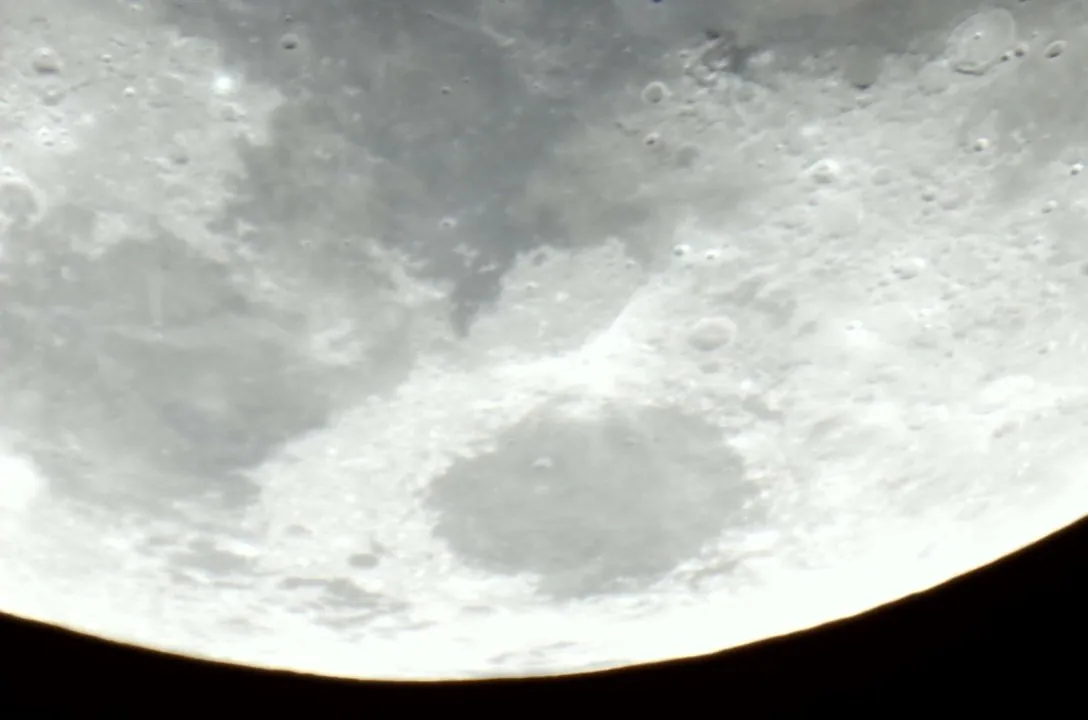
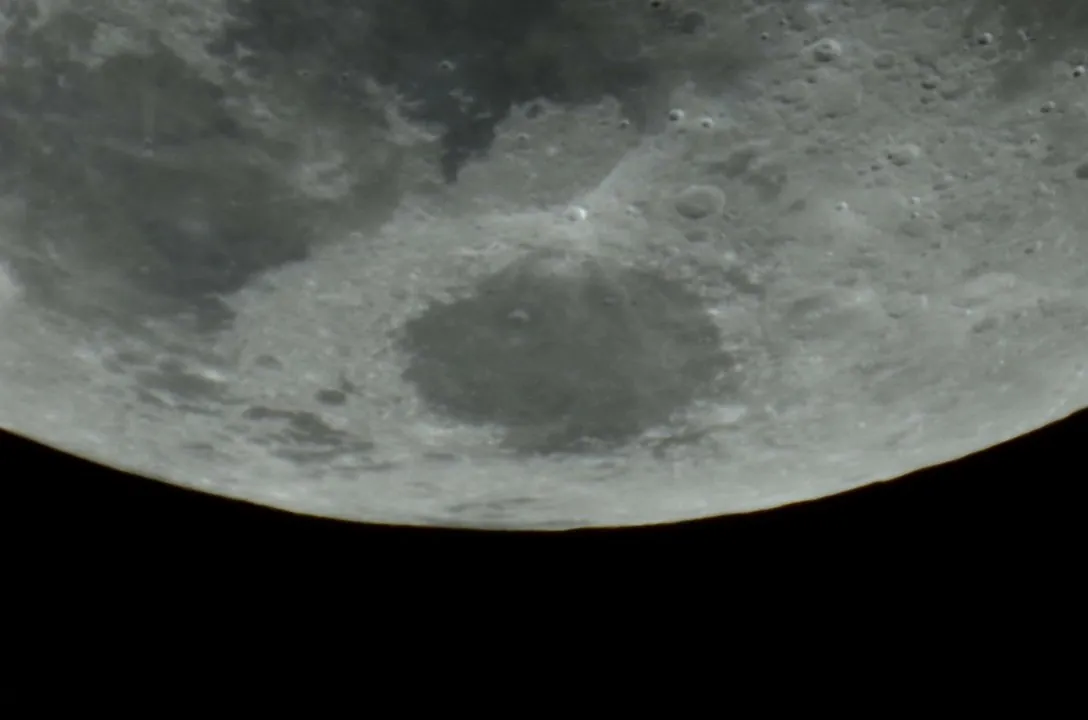
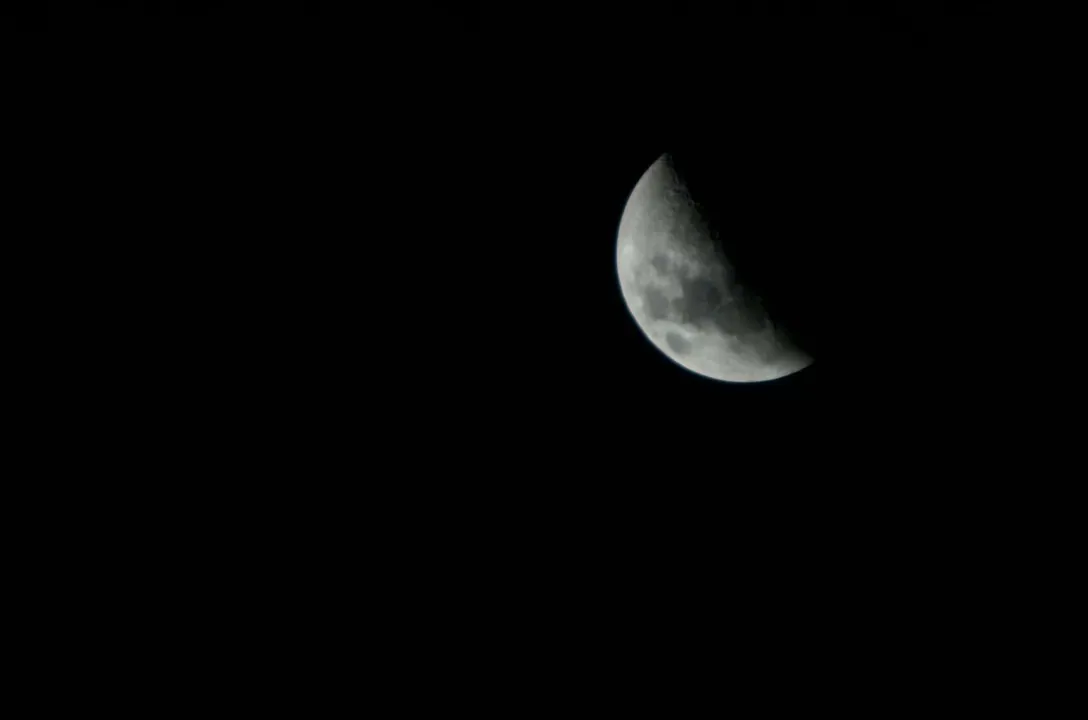
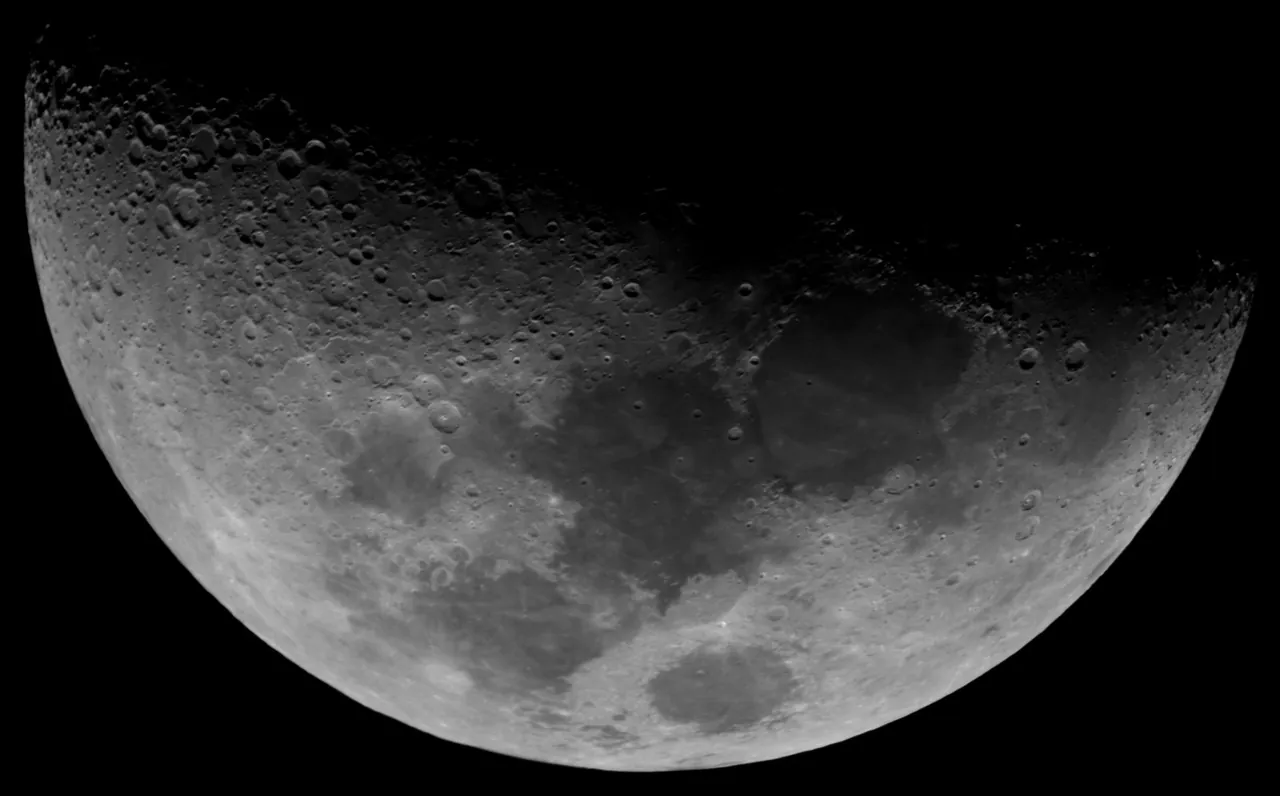
The best sky of the spring. Two 43-panel lunar mosaics on the AZ-GTi, 128 GB each, every goto within two arcseconds, but each grid missed most of the Moon; stitched together, the two make a complete half Moon. Getting there took an hour: the finder and the Mak point about a third of a degree apart and nothing recorded it. Saturn reached the finder and never reached the Mak; I packed up at 23:05 with the conditions still excellent.
127 Mak on the AZ-GTi, the SV205 swapped between the SVBONY finder and the Mak through the night. rig-ui on the laptop, outside, on the mount's own hotspot; first night on the new rig-ui build from the review. Cloudy until about 19:30. Written up the same night.
The rig-ui build was new tonight, and two things it changed showed up straight away. The launcher now only listens on the laptop itself and the tailnet, so indoors the page is at the tailnet address. And astropy no longer fetches earth-rotation tables, so the console prints a warning that tonight is past its bundled table. Harmless: it is under an arcsecond.
20:22 to 20:46, finding the Moon in the Mak
The Moon was centred in the finder by hand at 20:22. Freedom-Find had stopped tracking after a run of pushes, so it had already drifted. Tracking back on, camera into the Mak: black.
A spiral search from the finder's aim did find the Moon at 20:29, two fields down and left, and stopped on it. Claude's watcher had given up 50 seconds earlier, and Claude then STOPped the mount and moved away from it. I saw it go past on the screen.
Back in the finder, the Moon went onto a main-scope marker Claude placed from that search, and the camera went back in the Mak: black again. A second search, this time with the camera correctly marked as the Mak and not the finder (the first try ended after one field, because it thought the camera saw two degrees), stopped on the Moon at 20:46 three fields out.
Calibration, and centring on a half Moon
rig-ui's Calibrate failed twice in the Mak, both times on its third step, when the limb had walked far enough that the frame was mostly sky. A hand-rolled two-move version was spoiled by backlash. What worked was the limb: fitting the edge with the Moon's known radius gives the disc centre to a few pixels, even with the centre off the frame. A first attempt fitted the terminator instead, which on a 47% Moon is nearly straight and means nothing; it sent the mount 17 arcminutes the wrong way. Fitting the real limb, and taking the altitude direction from how the limb moved, put the Mak within a few arcminutes of the disc centre at 21:00, just on the dark side of the terminator.
Align on the Moon started a fresh alignment (two stale references dropped): home bearing +19.55 degrees, altitude index -2.95.
The mosaics
The plan refused first: the mosaic's safety check only knew about the azimuth offset, and the altitude encoder reads three degrees high since the Freedom-Find re-syncs. Fixed so it reads the altitude offset from the alignment too. The first real start then refused at the camera check, twice wrong: "25" meant 2.5 ms, not 25, and the disc centre of a half Moon is dark. The script's anchor shift exists for this; I aimed 16 arcminutes onto lit ground and told it so.
| start | anchor | panels | exposure | size | result |
|---|---|---|---|---|---|
| 21:06 | 16' from centre, lit side | 43 of 48 | 33 ms | 128 GB | complete 21:30 |
| 21:40 | bright limb, 13' from centre | 43 of 48 | 30 ms | 128 GB | complete 22:03 |
Every goto landed within two arcseconds and every tracking restart measured within a few per cent. About 35 seconds a panel. But most of each grid missed the Moon: only 10 of the first run's 43 panels and 18 of the second's had any Moon in them. The grid is laid out around where the alignment says the disc centre is, and by then that was several arcminutes out, more than the margin allowed. The dim panels were flagged as they came in, and nobody stopped to look. Each run alone is a Moon with a staircase bitten out of it, a different corner each time; stitched together the two runs make the whole half Moon.
Saturn
The goto at 22:15 stopped halfway: Freedom-Find mistook the gear backlash during a fast leg for a hand push, e-stopped and re-synced the azimuth counter by 0.68 degrees. Fixed and rig-ui restarted; the second goto ran clean. Then nothing in the Mak out to 0.4 degrees. The finder showed nothing at all, not even stars at a full second, until I went over it at the scope; then Saturn was there, centred with one tap at 22:37. Both of Claude's guesses at the finder-to-Mak offset came from the Moon, which is too big to pin a ten-arcminute field, and both missed. The right way, the eyepiece in the Mak while the camera watches the finder, came about twenty minutes too late, and I packed it in at 23:05.
What I got wrong
- Never measured the finder-to-Mak offset in daylight. Second night running it cost an hour. It is the whole problem.
- Pushed the tube with tracking on. Freedom-Find caught each push and stopped tracking, which is what it is for, and the Moon drifted off while I wasn't looking.
- Turned tracking off and on mid-centring. No harm to the alignment, but the target moved.
- Started the camera while a mosaic owned it, very nearly. Nothing broke.
- Exposed too short. 33 and 30 ms left the brightest highlands at about 190 of 255 and the panels by the terminator peaking near 140, with nothing clipped anywhere. About 40 ms would have filled the range and lifted the terminator out of the noise.
What the software got wrong
- A search was abandoned the moment it succeeded, because the watcher timed out first.
- The mosaic cap ignored the altitude frame offset, and Freedom-Find treated backlash as a push. Both fixed tonight and committed.
- Exposure units: lunar-mosaic takes the camera's 100-microsecond units, the page shows milliseconds.
Left for next time
- Boresight in daylight, on a distant mast, camera in the Mak then in the finder. Then a point target: Saturn, with the eyepiece in the Mak and the camera in the finder, and mark it.
- Calibrate the Mak camera on a full frame of lunar texture, or give Calibrate fewer steps.
- Expose to about 40 ms for a half Moon: set it on the bright limb, highlights near 240.
- Offload: the laptop is down to 71 GB. Done 19/10: everything checksummed on the Xeon and the MacBook, then cleared off the laptop and the ASTRO256 stick. 348 GB free on the laptop, the stick empty.
- Centre the mosaic grid on the Moon, not on the alignment: after an hour the one-point model was minutes out. Stop the run if the first panels come back dim. Built the next day: the mosaic measures the Moon before it lays the tiles.
- Saturn, first thing, from a measured boresight.