SESSION 26 · 11/26 · WORKED
The phone, on a moonless morning
After Saturn, the phone. A few frames at eleven, nothing worth keeping but one wide field. Then out again before four with the Moon new and down, and the southern sky high: the Large Magellanic Cloud, the Milky Way through Carina, Orion in the north. Every keeper was ten seconds or close to it on the phone's ordinary lenses. Every zoomed frame was a reject.
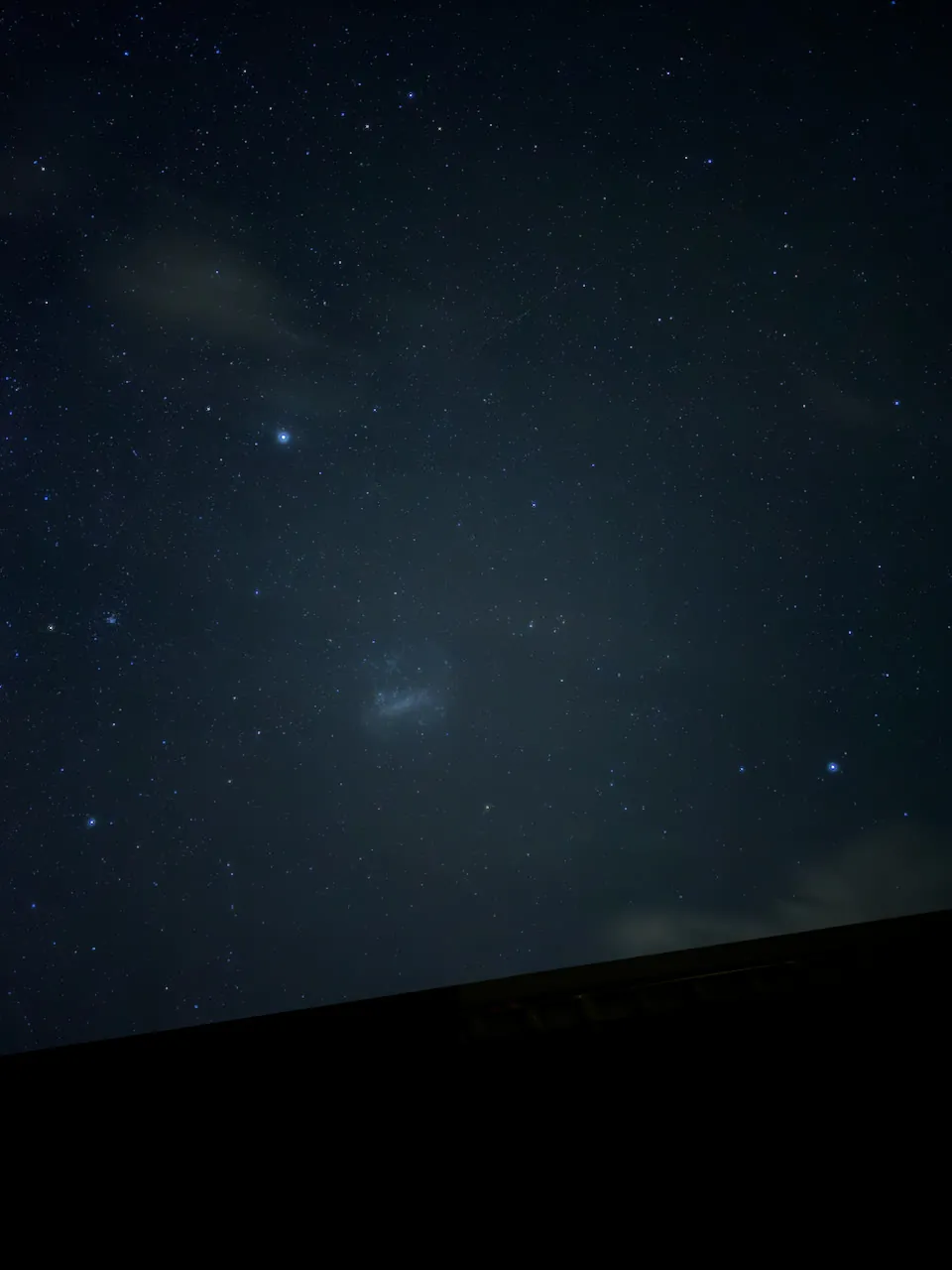
iPhone 17 Pro Max, from the back yard. Two goes: 23:01 to 23:11 on 8 November, after the Saturn runs in Saturn through poor air, and 03:44 to 03:56 on the 9th. New Moon, set at 19:01, so a dark sky both times. Written up on 9 November.
23:01 to 23:11, the wrong lenses
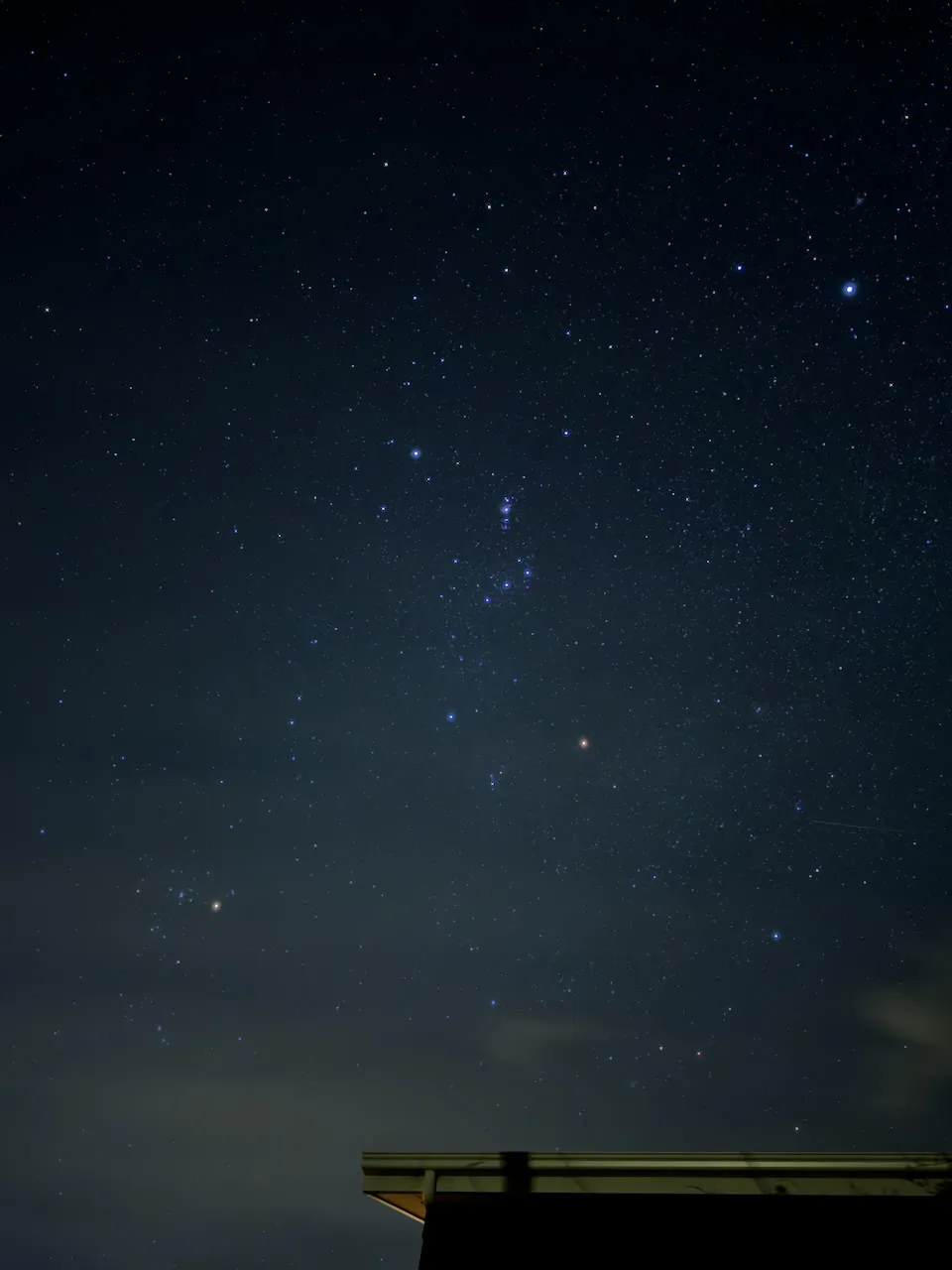
Seven frames. The southern sky was still low: Orion just up in the east, Carina under ten degrees.
| frame | time | lens | exposure | ISO | verdict |
|---|---|---|---|---|---|
| IMG_2294 | 23:01 | 0.5x, 14 mm | 1 s | 5000 | reject, nearly black |
| IMG_2295 | 23:03 | 0.5x, 14 mm | 10 s | 3200 | keep, wide star field |
| IMG_2298 | 23:06 | 2x, 48 mm | 10 s | 4000 | reject, stars trailed |
| IMG_2299 to 2302 | 23:08 to 23:11 | 4x and 8x, 100 to 200 mm | 0.5 s | 8000 | reject, a few stars |
The telephoto would not give more than half a second. At ISO 8000 that is a handful of points and nothing to say which.
03:44 to 03:56, the southern sky overhead
Thirteen frames and a short video. Canopus 72 degrees up, nearly overhead; the Large Magellanic Cloud 56 degrees up due south; the Carina Nebula 38 degrees in the south-east; Orion and Sirius high in the north.
| frame | time | lens | exposure | ISO | target | verdict |
|---|---|---|---|---|---|---|
| IMG_2304 | 03:44 | video | 4.5 s | one faint point | reject | |
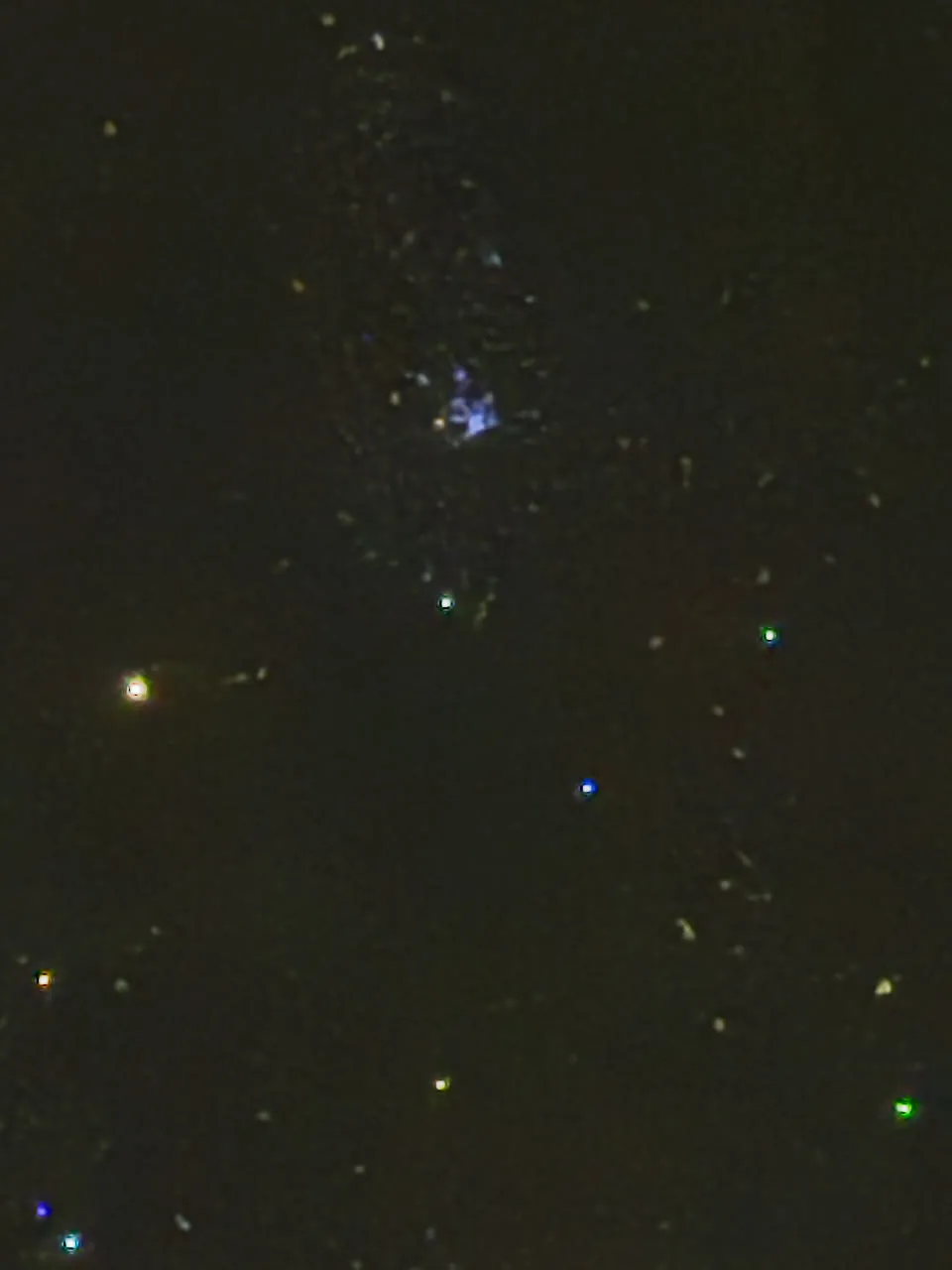
| IMG_2305 | 03:46 | 1x cropped, 198 mm | 2 s | 6400 | M42 | reject, trailed and noisy |
| IMG_2306 | 03:47 | 1x cropped, 198 mm | 10 s | 3200 | reject, noise | |
| IMG_2307 | 03:48 | 1x cropped, 198 mm | 10 s | 1000 | reject, noise | |
| IMG_2308 | 03:49 | 1x, 24 mm | 0.25 s | 2000 | reject, underexposed | |
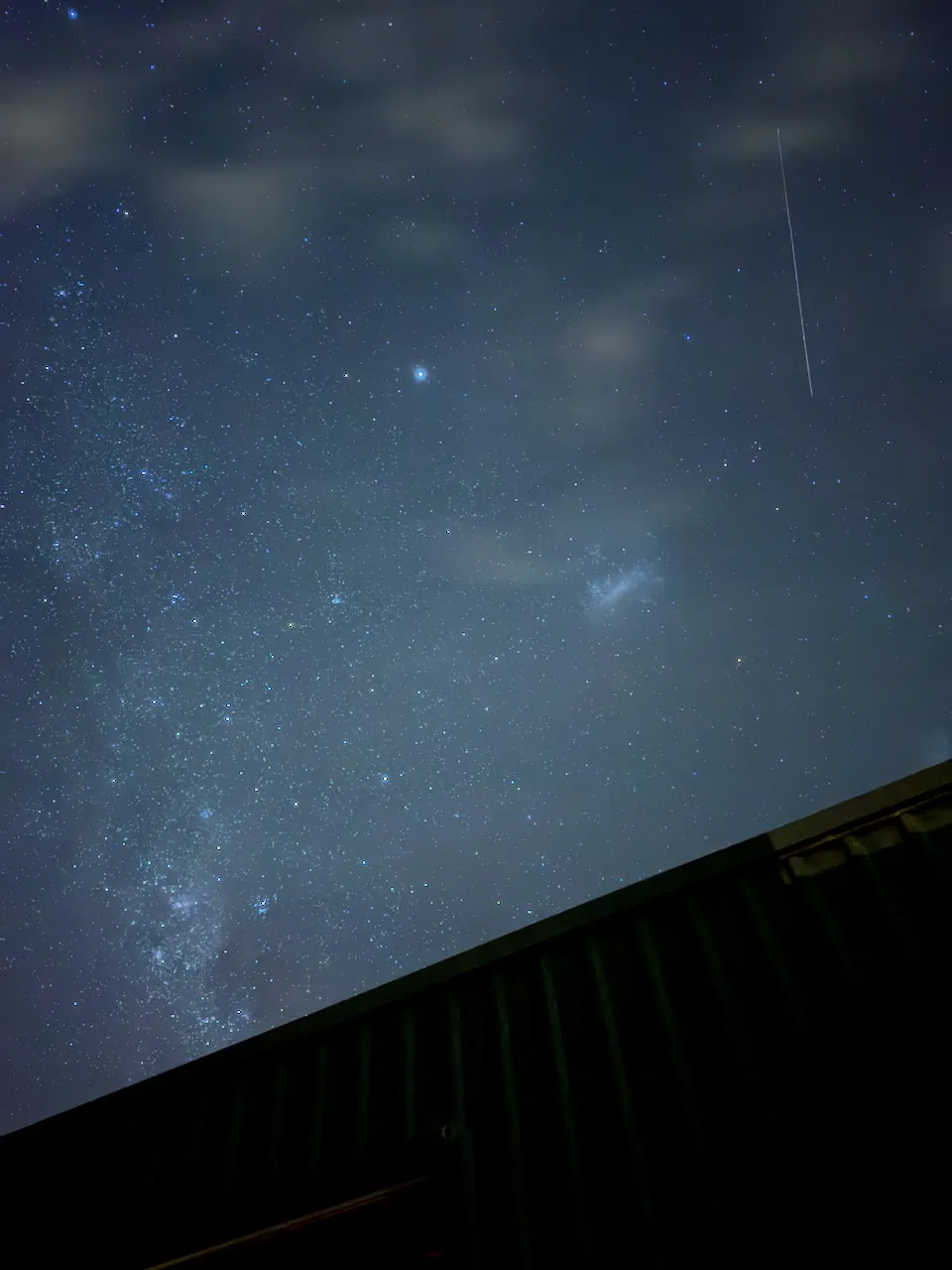
| IMG_2309 | 03:49 | 1x, 24 mm | 10 s | 2500 | LMC, Carina Milky Way, Canopus | keep, a satellite |
| IMG_2310 | 03:51 | 1x, 24 mm | 10 s | 6400 | LMC, Carina Milky Way | keep, cloud coming in |
| IMG_2311 | 03:52 | 1x, 24 mm | 10 s | 3200 | LMC, Canopus | keep, high cloud |
| IMG_2312 | 03:53 | 1x, 24 mm | 10 s | 1600 | LMC, Canopus | keep, the cleanest |
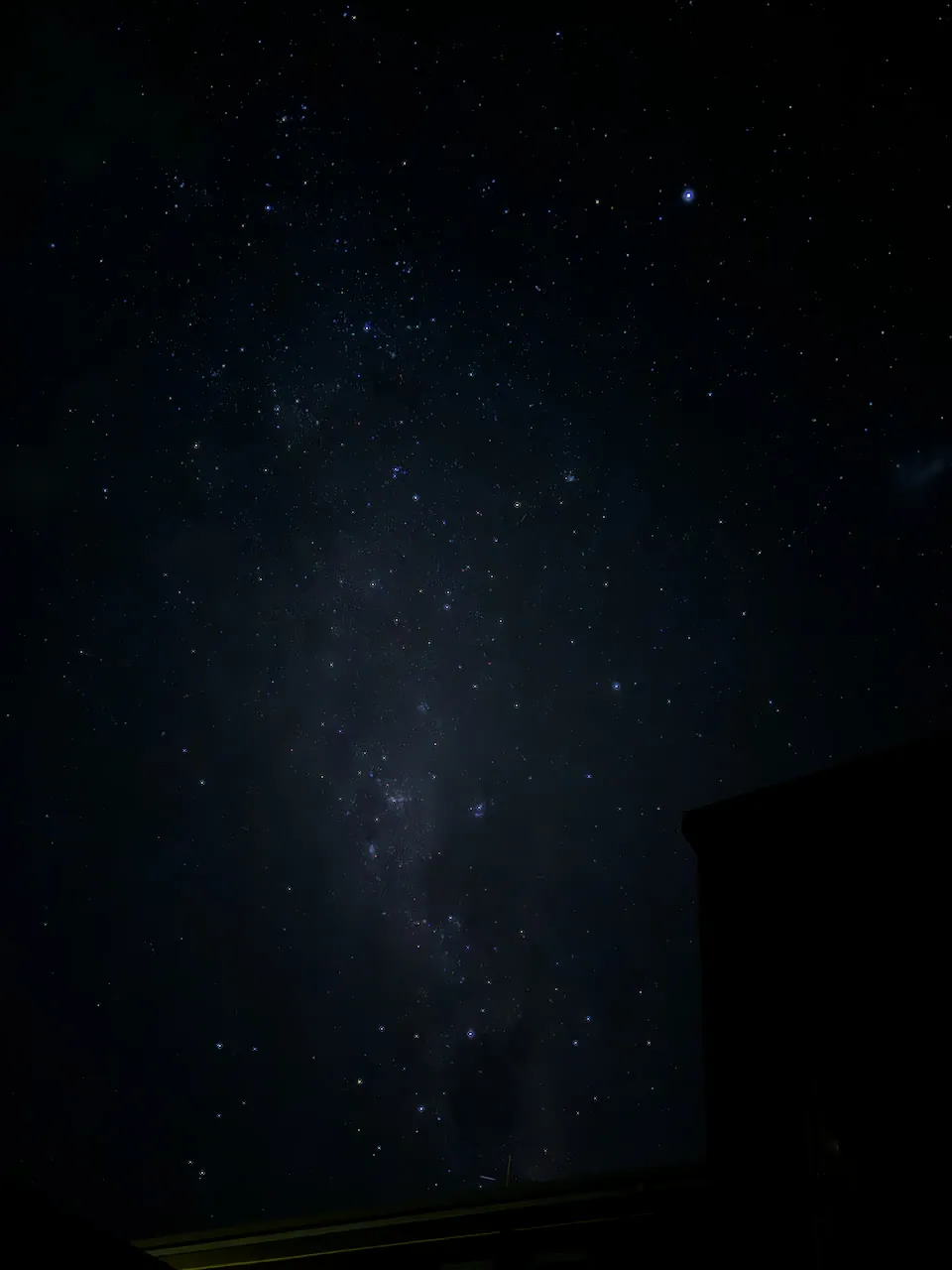
| IMG_2313 | 03:54 | 1x, 28 mm | 10 s | 1600 | Carina and Vela Milky Way | keep |
| IMG_2314 | 03:55 | 1x, 28 mm | 2 s | 6400 | Carina Nebula, Canopus | keep |
| IMG_2315 | 03:56 | 1x, 28 mm | 10 s | 1250 | Orion, Sirius, Aldebaran, Hyades | keep, best framing |
| IMG_2316 | 03:56 | 1x, 24 mm | 2 s | 1600 | Orion | reject, underexposed |
Identified by eye and checked against where each one was at 03:50 from here, not plate-solved. Confident on the Cloud, Canopus, the Carina band, Orion, Sirius and Aldebaran; less so on fainter single stars.
By lens
| lens | frames | keepers |
|---|---|---|
| 0.5x, 14 mm | 2 | 1 |
| 1x, 24 to 28 mm | 9 | 7 |
| anything zoomed, 48 to 200 mm | 8 | 0 |
What worked on the Cloud: ten seconds, main lens, ISO 1600 to 3200. Ten seconds was the longest the phone gave all night. The ISO 6400 frame is the noisiest of the four.
Zoom gave nothing. empty magnification, on a phone: the 2x and 8x settings on the main lens are crops of it, the telephoto is a smaller, slower lens held to half a second. M42 is really in IMG_2305, a blue patch where it should be, but under smeared stars and noise. The written lesson is the phone wide lens did all the work.
Left for next time
- The main lens only, ten seconds, ISO around 1600.
- The Small Magellanic Cloud and 47 Tucanae, both in the same part of the sky.
- The originals into the archive, not just these copies.