SESSION 24 · 11/26 · WORKED
A Saturn worth keeping
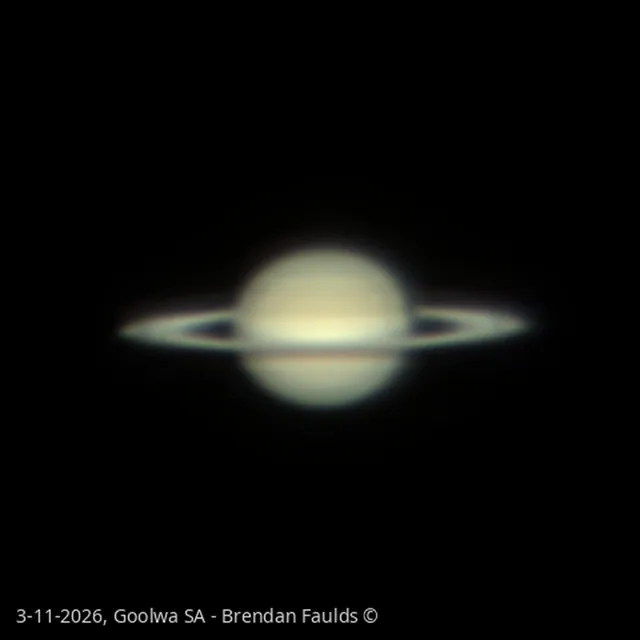
Saturn on the 127 with the ZWO, at 20 ms and gain 335, near its highest. The planet drifted out of the frame all night even with tracking on, and the stacker had to chase it. Twenty-four recordings…
 AUSSIESCIENCE CLIPS.
Subscribe on YouTube
GEAR · IN USE
The planned replacement for the SV205. Fewer, bigger pixels and seven times the frame rate, which is the pairing this scope actually wants.
Chosen on 13/09/2026 against a $350 ceiling. In stock at Optics Central, about three weeks at Bintel.
The counterintuitive part is that it has far fewer pixels than the SV205 and that is the point. A 102 mm aperture resolves 1.36 arcseconds and nothing in the camera can change that. The question is only how many pixels that one blur spot should land on.
| [[sv205]] | ASI662MC | |
|---|---|---|
| pixel size | 1.4 µm | 2.9 µm |
| scale at 1300 mm | 0.222"/px | 0.460"/px |
| pixels per resolution element | 6.1 | 3.0 |
| frame rate | 15.1 fps | 102.6 fps |
| bit depth | 8 | 12 |
| gain | none | manual |
| field on the Mak | 12.1' x 8.0' | 14.7' x 8.3' |
Three pixels per resolution element is where planetary work wants to sit. Six is splitting the same photons into smaller, noisier buckets and writing 21 GB per thousand frames to do it. The standard rule agrees: at f/12.7 the matched pixel is about 2.5 µm, so 2.9 needs no Barlow to be sampled correctly.
The real gain is frame rate, because lucky imaging is selection. On 12 September the best run kept the sharpest 15 per cent of 381 frames. The same minute on this camera is about 6,000 frames, so the same stack could come from the best 2 per cent. Add manual gain, which the SV205 [[no-gain-control|does not have at all]], and 12 bits instead of 8, and short exposures that freeze the seeing stop costing brightness.
What it does not fix. The Moon is 31 arcmin and this field is 14.7, so lunar work stays a mosaic. Nothing at this focal length and price changes that.
Rejected: ASI678MC at AUD $479 and ASI585MC at $649. Both over budget, and their smaller pixels would put the sampling back where the SV205 already is.
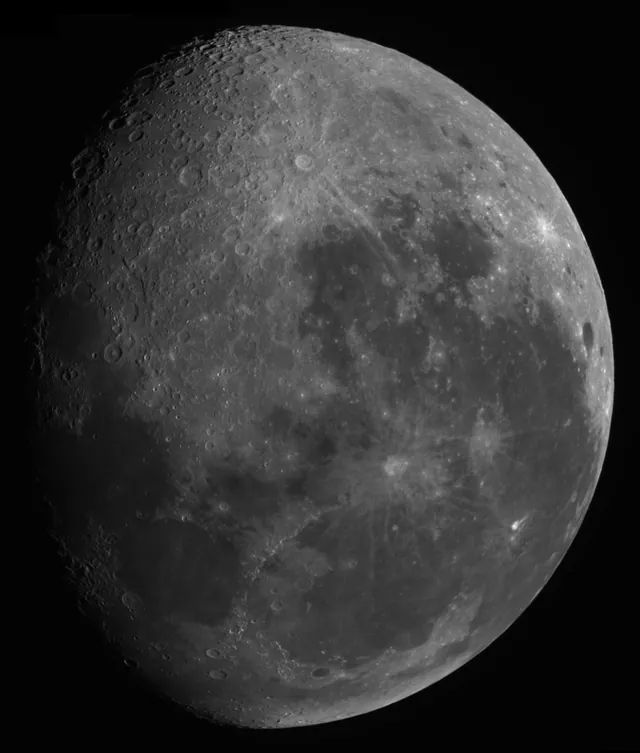
Arrived 28 October. First light on 29 October on the 127 Mak, where it measures 0.40"/px and a 12.8' x 7.2' field. Saturn in sixteen recordings, then five lunar mosaics, one of them the cleanest yet: at 4.5 ms and gain 242 nothing clipped. The IR-cut filter that came with it belongs on for colour work. See [[the-detail-was-in-the-recording]].
SESSION 24 · 11/26 · WORKED
Saturn on the 127 with the ZWO, at 20 ms and gain 335, near its highest. The planet drifted out of the frame all night even with tracking on, and the stacker had to chase it. Twenty-four recordings…
SESSION 23 · 10/26 · WORKED
First night with the ZWO ASI662MC, on the 127 Mak with the SV205 moved to the finder. Saturn came out soft in sixteen recordings, which I blamed on my focus; the numbers said seeing. After midnight…